
"Spaces Transformed by Art"
Archival quality reproductions that elevate every room, from gallery to home.
Our Product
The Collection of Museum Quality Art
Modern & Minimalist
The Silence of Design
In the absence of noise, true beauty speaks.
The Alchemist's Transmutation
In a world of fleeting digital moments, we believe in the enduring power of physical art. Our workshop, where precision meets passion, and the memories are transformed into tangible heirlooms. We are not merely printers, we are artisans of image, dedicated to preserving your most cherished photographs and creative works with museum-grade materials and uncompromising craftsmanship. Every product we create begins with a collaborative vision and ends with a masterpiece built to stand the test of time. We specialize in a curated range of fine print media and presentation styles, allowing to customize not just the image, but the very soul of displays. From the textured depth of a gallery canvas to the sleek, contemporary glow of frameless acrylic, our collections are designed to elevate the space and honor of story behind the artwork. Explore the art of permanence, discover the perfect finish for the vision.
Fine Art and Professional Media
The Alchemist's Media
Surface is substance. Choose the foundation that honors your art.
The Art of Selection
Foundations of Permanence
Archival surfaces chosen not by habit, but by intention.
Several archival surfaces. One unwavering standard. From luminous photo paper to textured fine art rag, each medium is selected to honor the integrity of your original whether photograph, painting, or digital creation.
"The right media surface doesn't just hold an image, it completes it."
In the alchemy of art reproduction, the surface is not merely a receiver, it is a partner in expression. Our print media collection spans multiple types curated substrates, each chosen for its unique ability to elevate a specific genre of work.
The enduring power of physical art, our workshop where precision meets passion and the art is transformed into tangible heirlooms, not merely printers, we work on image processing, dedicated to preserving your most cherished photographs and creative works with high quality materials and uncompromising craftsmanship.
Every product we create begins with a collaborative vision and ends with a masterpiece built to stand the test of time. We specialize in a curated range of fine print media and presentation styles, allowing to customize not just the image, but the very soul of the display. From the textured depth of a gallery canvas to the sleek, contemporary glow of photo based media, our collections are designed to elevate the space and honor the art of story.
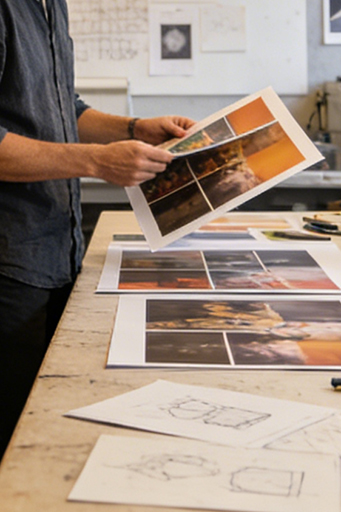
Professional Photo Paper Print
Precision printed, brilliance preserved.
The Art of the Print - Precision on Professional Photo Paper
Archival-Grade Brilliance | Professional Standard | Vivid Legacy
On professional photo paper, precision, colour vibrancy, and tonal range become the story. We treat photo paper printing with the same archival rigour as any museum commission. Using our multi-colour pigment ink system and spectrophotometer-calibrated colour management, we transform your digital photographs into tangible prints that honour every pixel, every gradient, and every nuance of your original vision.
Unlike consumer prints that fade or shift colour within years, our Archival-grade photo paper reproductions are engineered for generational permanence. We pair advanced pigment technology with a curated selection of fine art and photographic papers from lustrous baryta to textured cotton rag to match the emotional and aesthetic intent of your work.
Whether you are a professional photographer presenting a limited edition, an artist documenting your portfolio, or a collector acquiring a statement piece, our photo paper prints deliver Uncompromising colour accuracy, Deep, true blacks, Surface integrity and Archival confidence
Every print is produced in our climate-controlled workshop, inspected by hand, and finished to your specifications ready for matting, framing, or direct presentation.
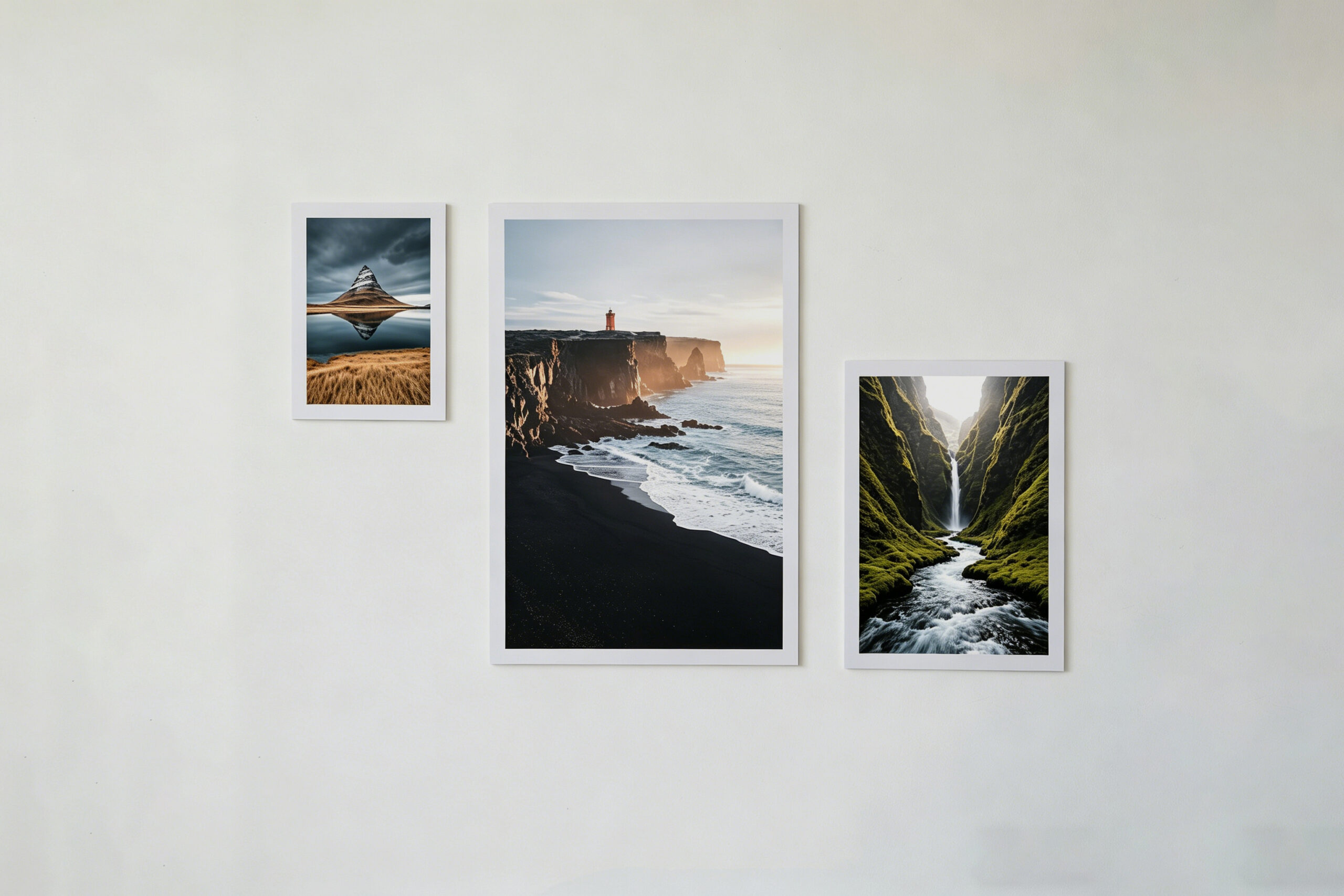
Glossy Finish Paper
Surface Texture Changes Perception
Matte paper scatters light. When light strikes a matte surface, it reflects in all directions, which effectively lifts the appearance of black areas making them read as dark grey rather than true black.
Glossy paper, in contrast, reflects light directionally. Black areas absorb light instead of scattering it, producing deep, true blacks that add drama, depth, and dimension to your image.
Colour saturation is equally affected. Matte paper scatters light, so less reaches your eye from any given angle. Colours appear muted, softer, and quieter. Glossy paper reflects light directly toward the viewer, making colours appear vibrant, punchy, and alive.
Glossy paper also enhances perceived sharpness. Its reflective surface creates micro-contrast at fine detail boundaries. Edges appear crisper. Text becomes more readable. Fine details—fur, feathers, fabric weave, skin pores become visible rather than softened.
For impact, vibrancy, and detail, glossy paper delivers what matte cannot.
Why Your Photograph Deserves Photo Paper?
The Difference Between a Print and a Legacy
Photo paper does not compete with your image. It serves it.
Unlike canvas, which imposes a woven texture. Unlike metal, which adds reflective depth. Unlike matt remove light colour in order toning down colour. Photo paper offers the most direct, unmediated, faithful representation of your digital file.
Maximum Resolution and Detail - Photo paper is engineered for sharpness. The coated surface of professional photo paper receives ink with minimal dot gain meaning each microscopic ink droplet stays exactly where the printer places it. No spreading. No bleeding. No softening. Photo paper captures and holds the full resolution of your file.
When detail matters most - Architectural photography with fine lines. Portraiture requiring skin texture and catchlights. Wildlife photography with fur and feather detail. Product photography requiring edge precision. Text-heavy or graphic artwork
True Colour Reproduction - Photo paper provides the widest colour gamut of any traditional print medium. The smooth, bright surface allows pigment inks to achieve their full spectral range vibrant reds, deep blues, subtle yellows, and every gradation between. For artists and photographers whose work depends on exact colour botanical illustration, fashion photography, brand-colour accuracy photo paper is non-negotiable.
Traditional Aesthetic for Traditional Subjects - Some images belong on photo paper. Black-and-white photography, particularly work with a classic or documentary aesthetic, feels authentic on photo paper. The deep blacks, smooth tonal transitions, and subtle surface sheen evoke the darkroom tradition. Canvas feels wrong. Metal feels modern. Photo paper feels timeless.
What Makes It "Professional"?
The Perfect Surface for Your Vision.
Professional photo paper is engineered specifically for this responsibility. Consumer papers are not.
Consumer prints fade. Professional photo paper prints endure. We combine conservation-grade materials with colour accuracy to ensure your photographs reproduce exactly as you intend with a lifespan measured in decades, not years. From rich, deep blacks to subtle highlight transitions, every nuance is preserved.
Colour Accuracy That Survives the Proof - Consumer printers and online labs guess at colour. Professional prints measure it using spectrophotometers and high-end monitors calibrated, what it seems on screen matches what tis hold on photo paper.
Pigment Inks That Outlast Decades - Consumer prints use dye-based inks that begin fading in months. Professional printing use pigment inks are micro-encapsulated for 100+ year lightfastness on certified photo papers Pigment inks sit on the paper surface. Dye inks absorb into the paper. Professional photo papers are coated specifically for pigment ink reception. Consumer papers lack these optimized coatings. Your expensive pigment ink printer delivers mediocre results on cheap paper. The paper is the bottleneck.
Weight and Thickness Communicate Quality - Professional photo paper is measured in gsm (grams per square metre). Consumer paper typically ranges from 120–200 gsm - thin, flimsy, prone to curling. Professional papers range from 250 - 400+ gsm. Heavier. Stiffer. Substantial in hand. A collector or gallery visitor notices the difference immediately. Thick paper feels valuable. Thin paper feels disposable.
Brightness and Whiteness Are Not Neutral - Papers contain optical brighteners or they do not. This matters enormously. Papers with optical brighteners appear brilliant white under daylight but shift colour under warm artificial light. They also yellow faster over time. Papers without optical brighteners maintain stable colour under all lighting conditions and resist long-term degradation. Professional photo paper manufacturers disclose this. Consumer papers hide it. For archival work, we recommend OBA-free (optical brightener-free) papers. What you see today is what you see in twenty years.
Contemporary Matt Paper Print
Light absorbed, not reflected, depth without distraction.
Contemporary Matt Paper - The Velvet Voice of Modern Art
Understated Elegance. Archival Depth. Modern Expression.
In an era of digital glare and fleeting finishes, the contemporary Matt Paper Print stands as a statement of quiet confidence. For glossy finishes media, contemporary Matt Paper Print stands apart. It offers a non-reflective, velvety surface that allows the viewer to connect with the artwork without distraction perfect for modern living spaces, minimalist offices, and professional galleries.
At Fine Art Digitals, we transform this subtle substrate into a gallery-worthy masterpiece. Unlike glossy surfaces that reflect light and distract the eye, our matt paper prints absorb light to reveal the true depth, texture, and nuance of your original artwork from watercolor washes and charcoal sketches to minimalist graphics and black-and-white photography.
Utilizing our pigment inks colour system and spectrophotometer calibration, we ensure every tonal gradient and subtle hue is faithfully reproduced onto archival-grade, contemporary matt papers. The result is a velvety, non-reflective finish that feels as authentic as it looks archival, tactile, and timeless.
Whether you are a photographer seeking exhibition-grade prints, a gallery representing contemporary works, an advertiser to produce a poster or an artist building a limited edition collection, our contemporary Matt Paper Prints offer the understated elegance and archival permanence your vision deserves. No glare. Just truth.
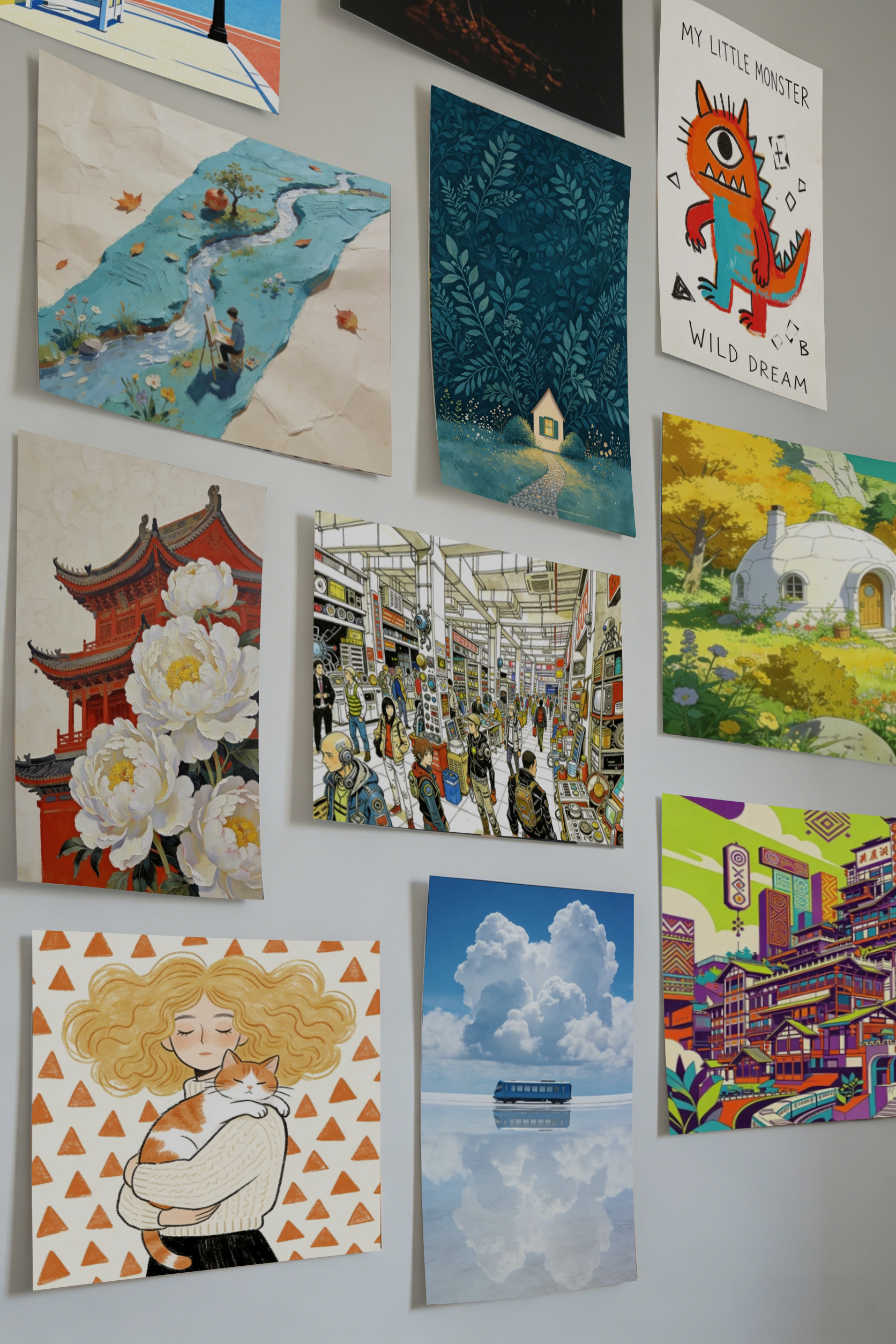
The Essence of Matt
The Modern Choice for True Art Lovers
Step beyond glossy glare. The Contemporary Matt Paper Print absorbs light to reveal true colour depth, intricate detail, and a velvety, non-reflective finish. It is the discerning choice for photographers, watercolour artists, and modern interiors where authenticity matters.
Unlike glossy or satin papers that create a plastic sheen and distracting hotspots under gallery lighting, our Contemporary Matt Paper Print works with light, not against it. The specially coated, acid-free surface absorbs ink evenly, preventing "dot gain" while delivering a wide colour gamut that feels natural and painterly.
This is the preferred medium for true art lovers because it honours the original medium making it ideal for Giclee reproductions of watercolours, charcoal sketches, and limited-edition photography.
Why Choose Matt Paper?
The Unrivalled Benefits of a Matt Finish
Choose matt paper for its ability to eliminate glare while preserving every nuance of your artwork. Unlike glossy surfaces that reflect light and distract the eye, the contemporary matt prints absorb ambient light delivering deeper blacks, smoother gradients, and a velvety texture that feels as refined as it looks. Ideal for framed pieces under glass, brightly lit galleries, or minimalist interiors where clarity and sophistication matter most.
Ideal Applications for Matt Paper:
Black and White Photography - The absence of glare allows pure, neutral greys and shadow details down to low density.
Watercolour and Mixed Media Reproductions - Preserves the original tooth and texture, avoiding the plastic overcoat look.
Workspace and Hospitality Decor - Non-reflective surfaces reduce eye fatigue and maintain readability under varied lighting conditions.
Limited Edition Giclee Prints - Collectors value matt finishes for their traditional, tactile fine art feel and certified archival stability.
Digital Fine Art Paper Print
The digital hand still carries the heartbeat of the artist.
Digital Fine Art Paper - The Art of Fine Art Paper Printing
Archival Pigment Prints on Exquisite Fine Art Papers.
In the realm of digital fine art reproduction, the substrate is just as important as the image itself. Fine art paper is not merely a surface; it is an integral part of the artwork’s soul. Unlike standard photo paper or canvas, these archival-grade, 100% rag (cotton) papers offer a tactile, luxurious feel, exceptional colour fidelity, and unparalleled archival longevity.
At Fine Art Digitals, we transform your digital creations into tangible masterpieces using advanced pigment printing technology on the world's finest archival papers. Our process honours the original artistic intent whether it's the subtle texture of watercolour, the deep velvety blacks of a photographic print, or the vibrant pop of a digital illustration. Each print is a limited-edition work of art, crafted to last for generations.
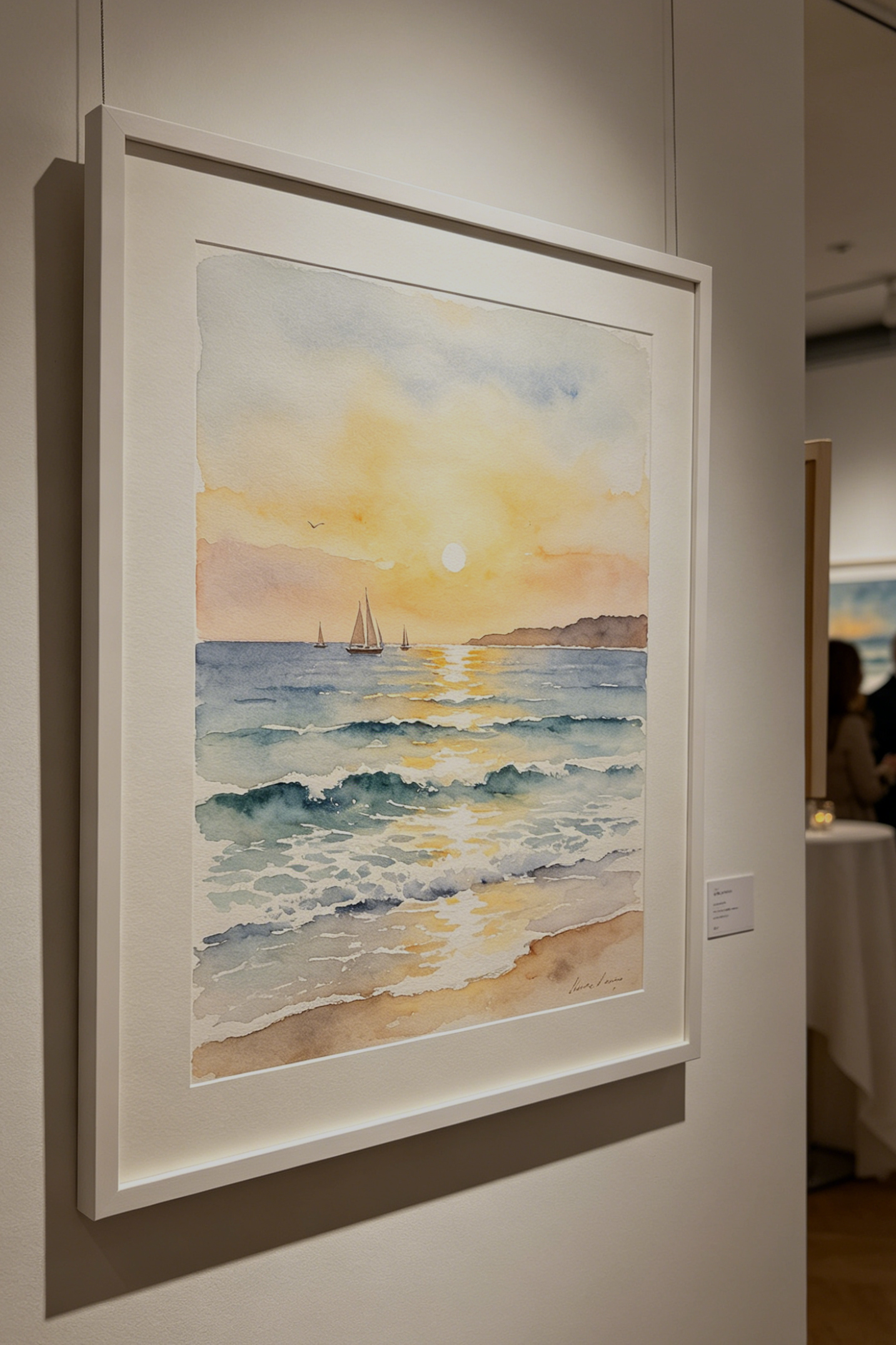
More Than a Surface. The Foundation of Legacy.
Where Vision Meets Texture - The Fine Art Paper Difference
In an age of disposable pixels and mass-produced posters, true art demands more than ink on cheap paper. It demands intention. It demands permanence. It demands a substrate worthy of the masterpiece it carries.
Fine art paper is that foundation.
Crafted from 100% cotton rag, it contains no acid, no lignin, and no wood pulp. It is the same material used by master printmakers for centuries stable, resilient, and naturally beautiful. This is not a surface you print on. This is a surface you entrust with your artistic legacy.
Why Fine Art Paper?
Beyond Reproduction - The Sensory Experience
In the world of digital fine art reproduction, the substrate is not a passive receiver it is an active participant in the artwork's expression. Fine Art Paper is distinctly different from standard photo paper or poster stock. It is a archival-grade, archival material engineered to honour the artist's vision with fidelity, texture, and permanence.
Uncompromising Archival Longevity - Fine art papers are typically made from 100% cotton (rag) and are completely acid-free and lignin-free. Unlike wood-pulp papers that yellow and become brittle within decades, fine art paper is naturally stable.
Superior Colour Accuracy & Depth - Our process utilizes pigment ink system paired with precision-coated fine art papers. The specialised coating absorbs ink evenly and holds pigment particles on the surface, rather than letting them soak in and lose vibrancy.
Tactile Artistic Texture - Fine art paper offers a sensory experience. From the velvety smoothness of Photo Rag to the pronounced, textured feel of watercolour paper, the surface becomes part of the artwork itself.
Commercial Value - Fine art paper prints are the standard for limited editions and collector-grade reproductions. Perceived value, the weight, texture, and feel of a fine art paper immediately communicate quality, allowing artists to command higher prices.
Art Gallery Canvas Print
Elegance printed, inspiration hung.
The Art of the Canvas - Archival Quality Digital Prints
Where archival precision meets the timeless texture of fine art canvas.
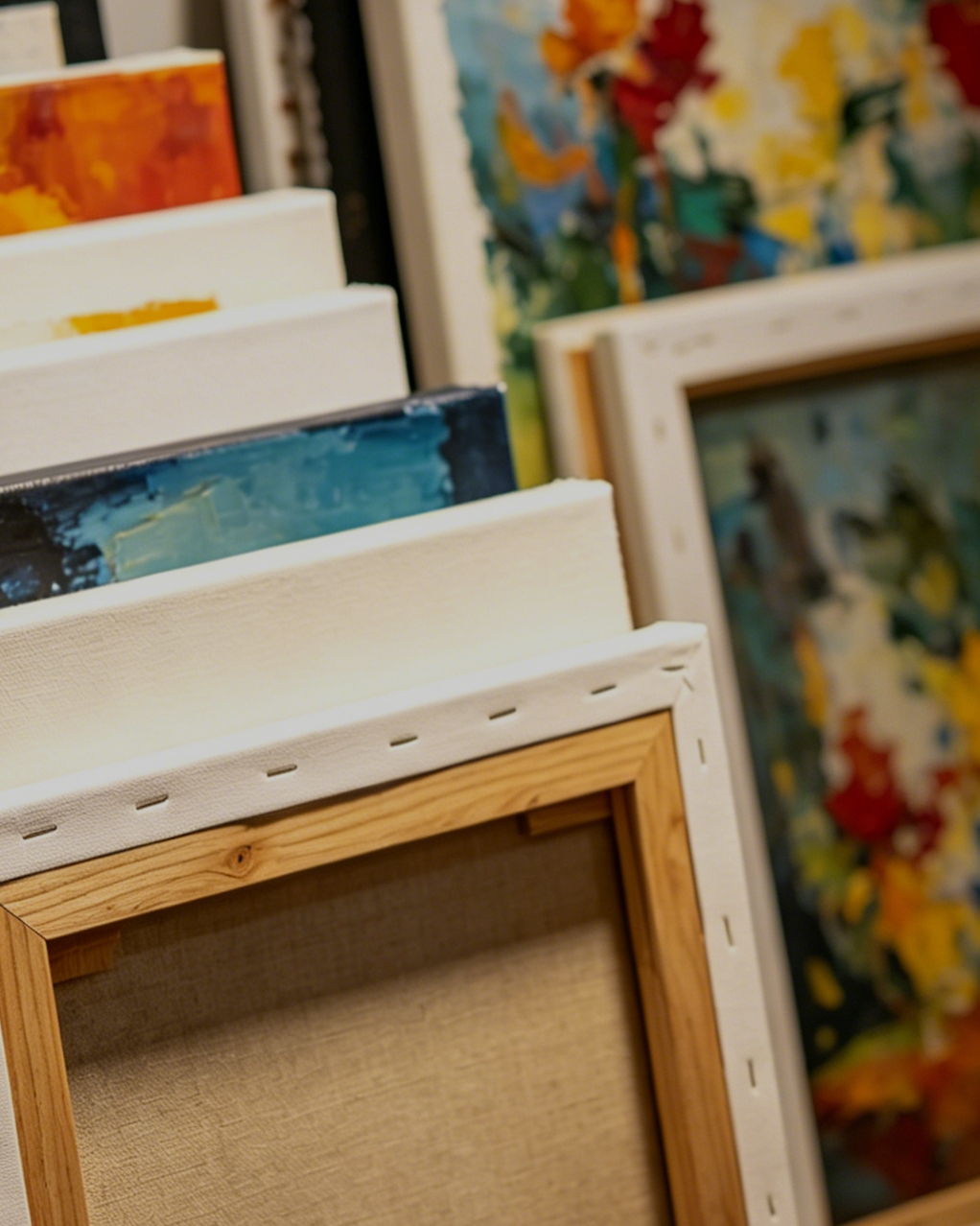
A digital canvas print is a museum-grade fine art reproduction where archival pigment inks are printed onto artist-quality canvas substrates, then hand-finished to create a durable, gallery-ready artwork. At Fine Art Digitals, this process transforms your digital files or scanned originals into tangible masterpieces that honour the texture, colour, and longevity of traditional paintings.
Archival Longevity that Pigment-based inks provide fade-resistant properties lasting over 100 years under proper display conditions. Texture Fidelity with advanced printing techniques match the surface feel of oil, acrylic, or watercolour originals. Professional Finishing to each canvas is hand-stretched over gallery stretcher bars to prevent warping and maintain tension. Protective Coating for archival varnish shields against moisture, dust, and light damage. Versatile Presentation that available stretched and unframed, or inset into custom framing solutions—from classic gilt to modern float mount.
More Than Just a Print
Transforming Digital Vision into Tangible Masterpieces
A digital canvas print is not merely a poster on fabric. At Fine Art Digitals, it is a archival grade reproduction, a process where advanced pigment printing technology meets the classic texture of artist grade canvas. We bridge the gap between your digital files or scanned originals and a gallery-ready artwork that feels as authentic as an original painting.
Unlike standard paper prints, our canvas prints are designed for longevity and impact. We utilize wide gamut pigment printing to achieve unparalleled colour accuracy, ensuring that every hue matches your original vision. The result is a piece that resists fading for over a century.
Why Choose Canvas for Your Art?
The Aesthetic & Practical Choice
Digital canvas prints offer a unique combination of aesthetic warmth and practical durability that traditional paper prints cannot match.
Timeless Texture that the fabric's natural weave diffuses light, eliminating glare and mimicking the look of an original painting.
Lightweight and Durable is more resilient than paper, resisting tears and requiring no fragile glass (though UV-protective glazing is available).
Ready to Hang, when canvas prints arrive stretched and ready to display, either unframed for a modern look or inserted into one of our custom frames (from classic gilt to modern float mount).
Versatile Scale that from small studies to large format installations (large inches via seamless panel assembly), canvas handles any size with integrity.
Traditional Art Paper Print
Every line incised, every layer screened - hand-made, never machine-made.
The Traditional Printmaker's Edition - Reproduced with Archival Precision.
Archival Precision for Intaglio, Etching & Screen Print.
For centuries, the true test of a print has been the paper it sleeps on. This is not a substrate; it is a collaborator. Engineered specifically for the rigor of traditional methods, this heavy-weight, cotton-rich paper is built to withstand the violence of the etching press and the flood of the screen print squeegee.
Unlike standard sheets that crack under deep embossing or curl when wet, the art paper remains dimensionally stable, offering a soft, forgiving bite for intaglio lines and a smooth, lint-free surface for high-mesh screen passes. Whether you are pulling a copper plate through a press or sheeting a 4-color poster, this is the archival canvas that turns pressure into art.
For artists dedicated to the hands-on processes of Intaglio, Etching, Lithography, and Screen Print, the final print is more than an image, it is a physical record of pressure, ink viscosity, and plate texture. At Fine Art Digitals, we understand that reproducing these works requires a fundamentally different approach than digital painting reproduction.
We provide a specialized service for non-digital traditional prints. Our process respects the unique characteristics of your medium, from the plate mark of an etching to the layered opacity of a silkscreen. We don't just scan your print; we interpret and preserve the tactile, three-dimensional quality of traditional printmaking.
Traditional Print Reproduction
Hand-Pulled Editions from Master Originals
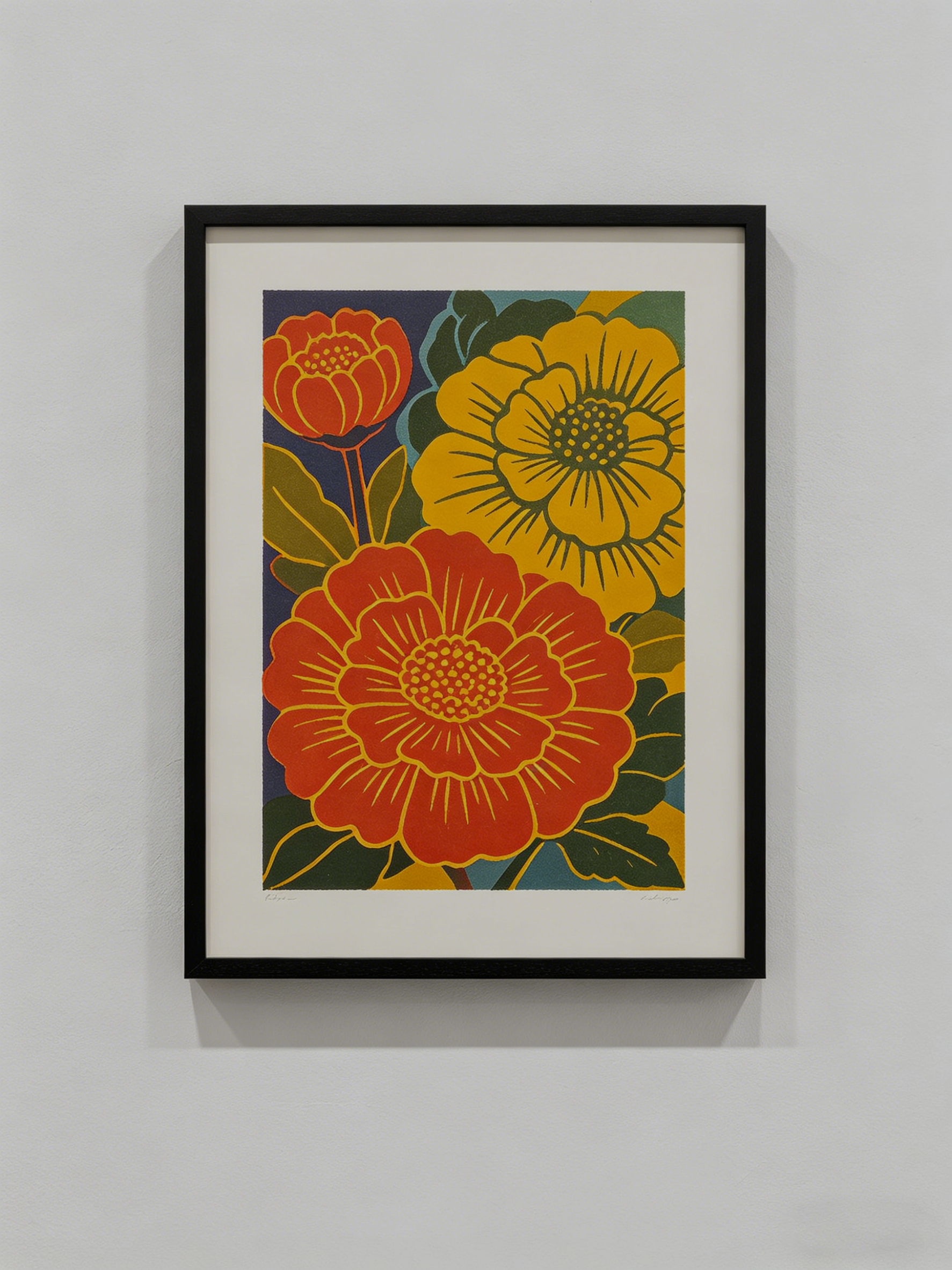
Traditional print reproduction is not copying, it is translation. The original artwork is studied, separated into layers, and re-rendered using the same hands-on methods that have served printmakers for centuries. Etching needles trace the original's lines. Screen stencils rebuild its colors. Letterpress type carries its text.
The result is not a digital facsimile. It is a second original a hand-pulled print that carries the texture, depth, and physical presence of the source material. For museums, galleries, and artists who refuse to compromise, this is how masterworks travel beyond the wall.
Reproduction is not replication. It is reinterpretation.
Using intaglio for line work, screen print for color, and letterpress for text, we translate original artworks into limited-edition prints by hand, on archival paper, under pressure. No scanners. No inkjet cartridges. No pixels.
Every mark is re-cut, re-stenciled, or re-set by a printmaker who studies the original's gesture, density, and texture. The result is a facsimile that carries the physical evidence of process: plate marks, stencil edges, embossed type, and ink that has bitten into cotton fiber.
For artists, estates, and institutions: this is how originals become editions without becoming cheap.
Why Use Traditional Printing?
The digital image is seen. The traditional print is witnessed.
Digital is instant. Traditional is immortal. Digital prints sit on the surface. Traditional prints are etched into the fiber. One is seen. The other is felt.
Traditional methods intaglio, screen print, letterpress produce prints with texture, depth, and archival longevity that digital cannot match. Each print is hand-pulled, not machine-spit. The ink bonds with the fiber. The surface holds the memory of pressure. For artists, collectors, and publishers who value process as much as product, traditional printing is not obsolete. It is essential.
Digital printing lays toner on top of paper. It is fast, cheap, and uniform but it is also flat, fragile, and forgettable. Traditional printing does the opposite. It pushes ink into the fiber. It leaves physical marks: plate marks from etching, stencil edges from screen print, deep embossed craters from letterpress.
Traditional printing is better:
Texture you can touch - A traditional print has topography. Run your finger across it. Feel the bite of the plate, the squeeze of the screen, the crush of the type. Digital is smooth. Traditional is dimensional.
Longevity measured in centuries - Digital prints fade, yellow, and crack within decades. Traditional prints on archival cotton paper last 200+ years. Rembrandt's etchings still hold. Yours will too.
Proof of human presence - Traditional printing is slow, imperfect, and physical. Every variation, every ghost, every wobble, every slight shift in registration is evidence that a human being made this. In an age of AI and automation, that evidence is rare. And valuable.
Versatile Fine Paper Print
Strength in texture, clarity in purpose.
Versatile Fine Paper Print - The Art of Tactile Expression
Beyond Standard Stock: The Versatile Fine Paper Philosophy
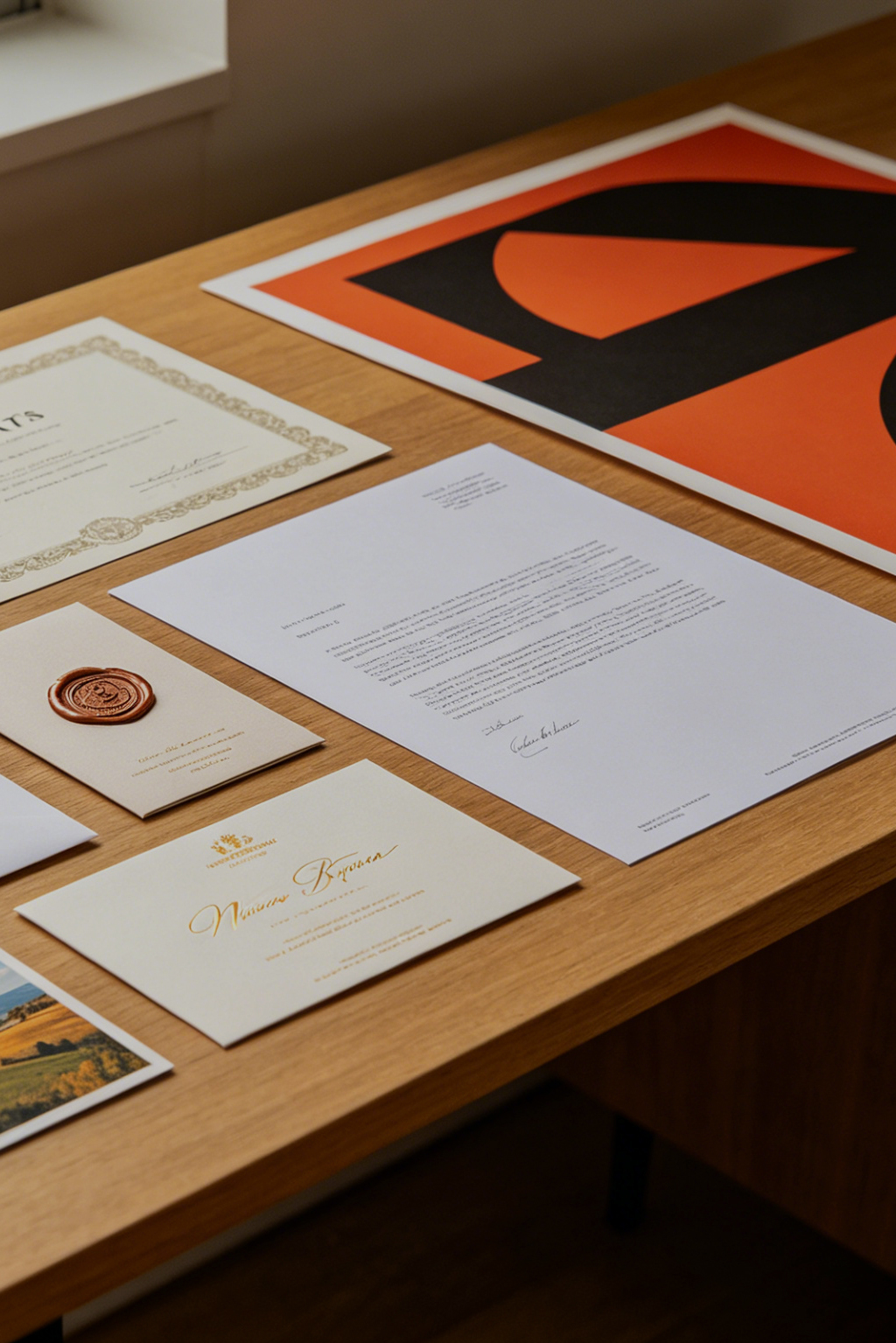
In an age dominated by screens, the physicality of print has become a luxury. The choice of paper is no longer a mere technicality; it is a foundational design decision that dictates how a message is felt, perceived, and remembered. Versatile Fine Paper Print represents the convergence of traditional papermaking artistry and modern printing precision. Whether you are crafting a heirloom-quality certification, a tactile postcard, or a limited-edition screen print, the substrate you choose is the silent narrator of your work.
Fine paper does not just hold ink; it interacts with light, responds to pressure, and engages the sense of touch. From the crisp rustle of a smooth surface sheet to the textured landscape of paper, this guide explores a curated collection of premium papers optimized for various distinct printing methodologies - digital, screening, etching, and offset.
The Philosophy of Substance.
Beyond the Pixel – The Renaissance of Fine Paper
Not all paper is created equal. Between the fragility of standard office stock and the rigidity of cardboard lies a professional realm: fine paper print. This collection is meticulously curated for designers, printers, and studios who demand archival quality, surface integrity, and multi-technique compatibility.
In an era dominated by screens, the physical artifact of printed matter carries disproportionate weight. This is the foundational truth of fine paper print, the substrate is not passive.
The Versatile Fine Paper Print collection bridges two seemingly contradictory demands - industrial reliability and artisanal expression. Each sheet in the reference library has been engineered to perform across multiple print environments while retaining the distinct character that fine paper buyers demand.
Why Use Fine Paper?
Seven Irrefutable Reasons to Specify Fine Paper Over Commodity Stock
Because in a world of infinite, weightless, ephemeral digital content, physical matter matters.
In a world where digital communication dominates and screens consume our daily attention, the question "why fine paper print?" becomes not just relevant, but essential. Fine paper is not just a surface, it is an active participant in specific printing methods. The answer lies at the intersection of psychology, sensory experience, permanence, and perceived value.
Perceived Value - A fine paper print costs marginally more per unit but generates exponentially more response, retention, and respect.
Ink Behavior Control - Commodity papers suffer from dot gain, ink spreads beyond intended boundaries, blurring serifs and reducing image sharpness. Fine paper's calibrated surface limits dot gain, preserving typographic precision.
Erasure and Forgery Resistance - For certifications and legal documents, fine paper's texture makes mechanical erasure (scraping ink with a blade) visually obvious. This provides passive security without additional printing.
Collector & Archival Demand - Art buyers, poster collectors, and wedding invitation archivists actively seek fine paper. A digital print on glossy photo paper has minimal secondary market value. The same image on fine paper commands premium pricing.
Hybrid Printing - As print shops increasingly adopted in hybrid presses (digital + screen + embossing in one pass), fine paper that performs across all modalities becomes the only rational choice. Buying commodity paper now means repurchasing fine paper later when hybrid workflows are adopted.
From the Workshop of Fine Art Digitals
"We have reproduced thousands of artworks. The ones that customers frame and keep for decades are never the ones on cheap paper. The investment in fine substrate is repaid in longevity, perceived value, and emotional impact. Choose the paper as carefully as you choose the image."
Gary Wong, Fine Art Digitals
Art and Professional Framing
The Alchemist's Frame
The vessel is as vital as the vision. Choose the presentation that completes your art.
The Final Curatorial Stroke
The Architecture of Presentation
A frame is not a container, but a continuation of the artistic journey.
Every corner joined, every mat cut, every surface protected, our framing transforms preservation into presentation. From museum-grade conservation to contemporary float mounting, each solution is engineered to honor the artwork while elevating the space it inhabits.
"The right frame does not confine the art, it releases it into the room."
Framing is the silent dialogue between artwork and environment, a partnership of protection, proportion, and presence. At Fine Art Digitals, we approach framing as an architectural gesture: each moulding selected, each mat layered, each glazing chosen with the same intentionality as the reproduction itself.
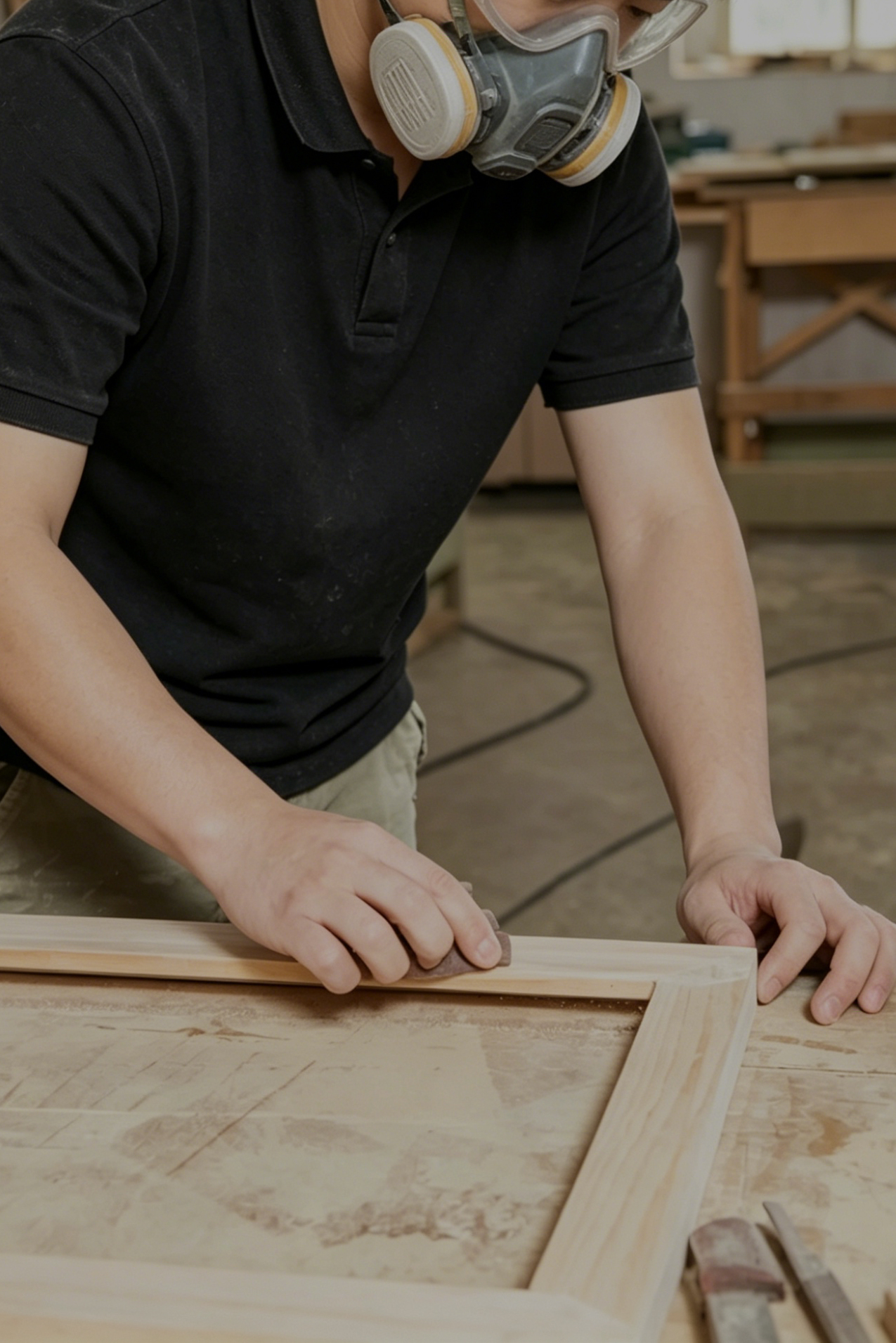
Our workshop combines CNC-precise cutting with conservation standards to deliver various distinct framing expressions. Whether your piece demands the invisible joinery of a shadowbox or the luminous clarity of a frameless facemount, we construct every component in-house. From acid-free mats to UV-protective glazing, from hand-joined hardwood corners to perfectly tensioned canvases, our framing extends the legacy of your artwork for generations.
Choose the presentation that completes your vision, because where the print ends, the frame begins its quiet, critical work.
Professional Photo Print Frame
Precision Clarity for Modern Imagery
"Let the image speak, while the frame protects."
Glossy or metallic, black & white or vibrant, your photo deserves a frame that enhances without competing.
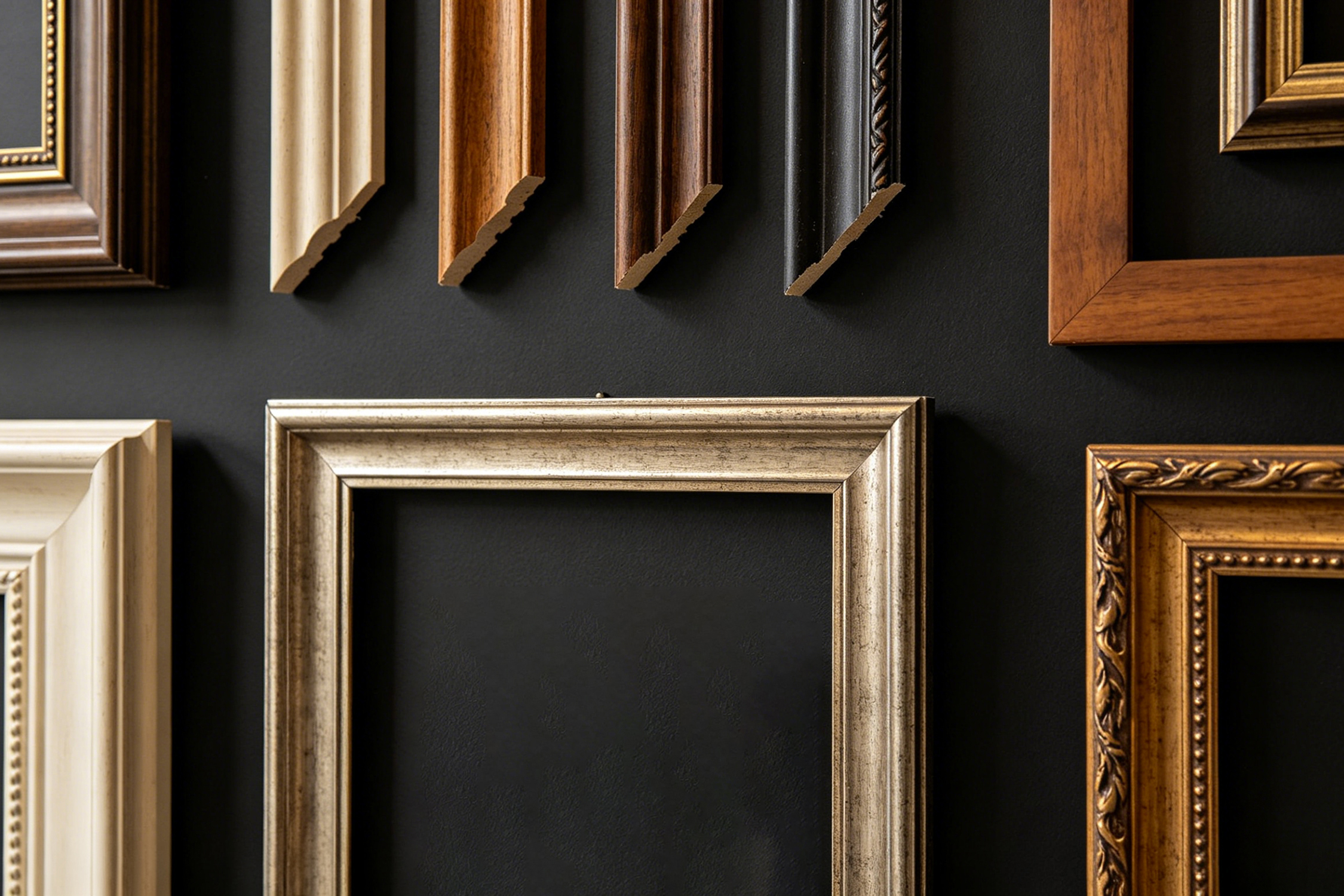
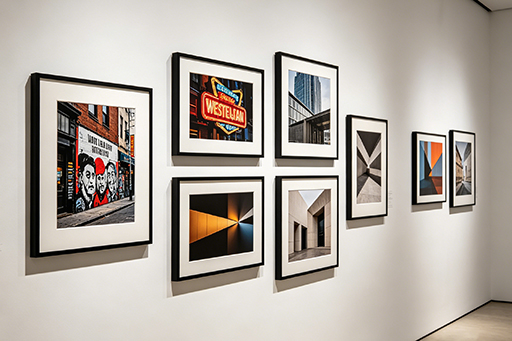
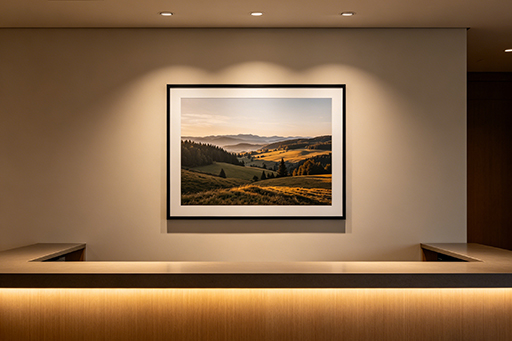
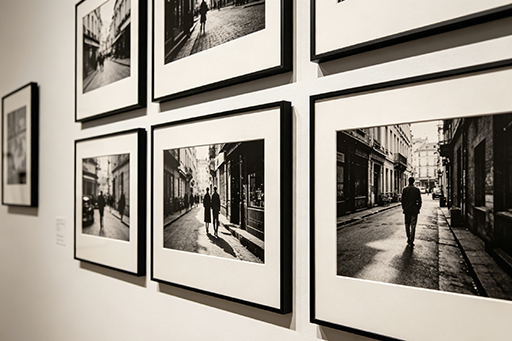
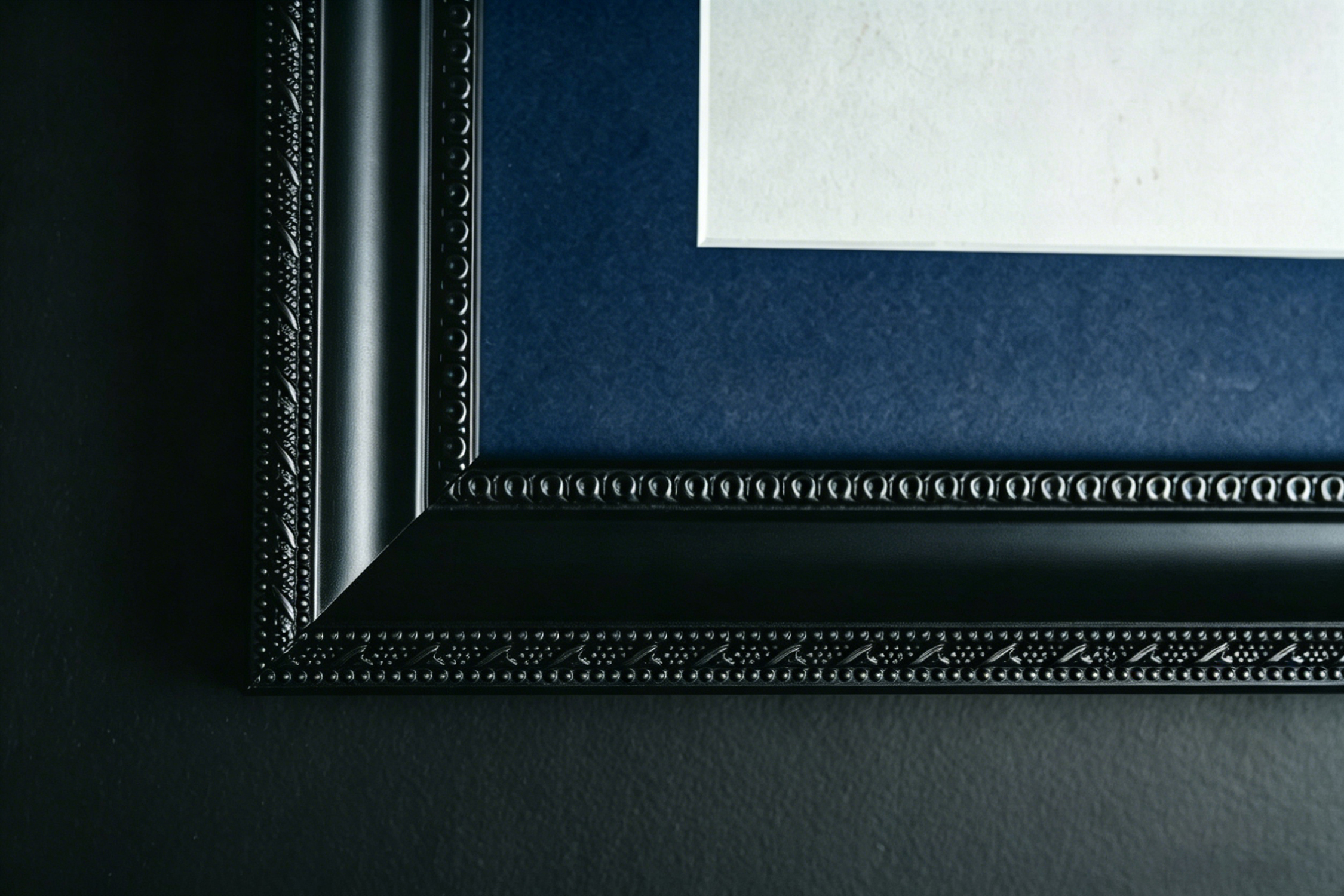
Engineered for contemporary photography and digital art, our Professional Photo Print Frame combines slim-profile mouldings with optical-grade glazing. The minimalist aesthetic ensures zero visual distraction, while conservation materials including UV-filtering acrylic and acid-free mounting guard against fading and humidity. Ideal for gallery exhibitions or modern interiors, this framing solution presents your photograph as a crisp, luminous window into its subject.
Beyond the Basics
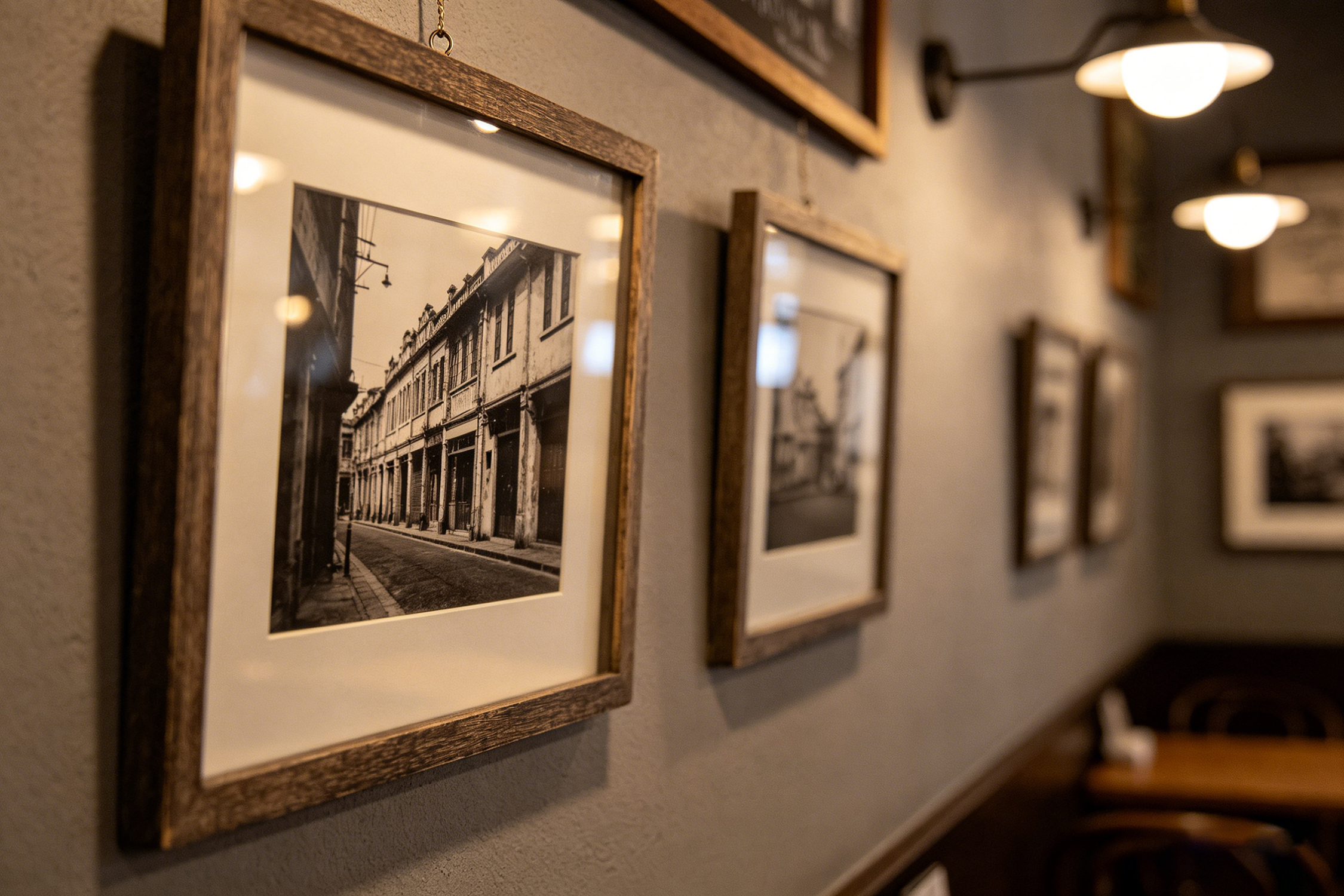
A framed photo print is a fine art reproduction of an original artwork, printed on professional media and finished with a hand-selected frame. These are conservation-grade display pieces meant to mimic the look and longevity of original artwork.
In the world of art reproduction, a framed photo print is far more than a photograph placed inside a decorative border. It is a finished, conservation-grade display object, a faithful reproduction of an original artwork that has been printed, mounted, glazed, and framed using professional archival methods.
While standard framing protects, true mastery elevates a photograph into a legacy piece. At Fine Art Digitals, we go beyond the basics of mere decoration. We view framing as an integral part of the artwork's narrative, employing advanced techniques that blend artistry with rigorous conservation science.
The Philosophy of Presentation
A frame is not an afterthought; it is the final brushstroke. It mediates the dialogue between the artwork and its environment. For a professional photograph, the right framing solution enhances depth, directs light, and preserves the precise colour integrity you've worked so hard to achieve. Our approach moves past standard "one-size-fits-all" solutions to a bespoke methodology where every element from the mount board to the glazing, serves the image.

Archive Application
Transforms a photograph or reproduction from a disposable object into a multi-generational asset. It is not merely a service, it is a certification of permanence, a guarantee of authenticity, and a commitment to the future value of the artwork who demand permanence, authenticity, and conservation-grade quality in fine art reproduction. Major purpose to protect artwork from fading, yellowing, and damage, to prove the art is authentic and professionally made, to allow future removal of the print without damage, to meet gallery and museum standard.
Creating an Archive is a commitment to permanence, it is the culmination of over a decade of refinement, ensuring your photographs are not just displayed but are preserved for future generations, adhering to the highest standards recognized.
The application is suitable for:
Individual Artists and Professional Photographers - Those who need their original works (oil, acrylic, watercolour, or digital photography) reproduced with permanence to sell as limited editions or preserve for legacy.
Discerning Collectors - Individuals acquiring art as an investment who require certified proof of longevity and material quality to ensure the piece retains its value.
Prestigious Galleries and Museums - Institutions that require exhibition-standard framing that meets conservation requirements (reversibility and protection) for displayed works.
Interior Design Firms and Architects - Professionals who specify artwork for high-end commercial or residential spaces where the pieces must withstand environmental factors (light, humidity) without degrading.
Corporations and Government Agencies - Entities commissioning public art or boardroom installations that require documented durability and adherence to strict preservation standards.
Technical Information
Standard Photo Grade Framing
Glazing
Function : Standard. Front Protection Pane : Acrylic and Glass, Thickness : 2-3 mm.
Mounting Board
Premium High Density. Framing Grade. White Foam Board. Thickness : 3-5 mm.
Matting
Mountboard Quality Level : 2-3. Thickness : 4 ply, 1.4 - 1.6 mm. Colour : White, Black and Colours.
Wooden Frame Mouldings
Premium Wooden Frame Bar. Colour : White, Black and Colour. Surface : Smooth, Matt. Dimension : 2-4 cm (Width) x 2-4 cm (Depth).
Backing Board
Wooden Board. Thickness : 2 mm.
Professional Photo Grade Framing
Glazing
Function : Featured. Front Protection Pane : Acrylic and Glass, Thickness : 2-3 mm.
Mounting Board
Premium High Density. Art Grade. Acid Free. White Foam Board. Thickness : 3-5 mm
Matting
Mountboard Quality Level : 1-3. Thickness : 4 ply, 1.4 - 1.6 mm. Colour : White, Black and Colours.
Wooden Frame Mouldings
Premium Wooden Frame Bar. Colour : White, Black and Colour. Surface : Smooth, Matt. Dimension : 2-4 cm (Width) x 2-4 cm (Depth).
Backing Board
Wooden Board. Thickness : 2 mm.
Fine Art Print Frame
Museum Legacy for Gallery Works
"Tradition preserved, one corner at a time."
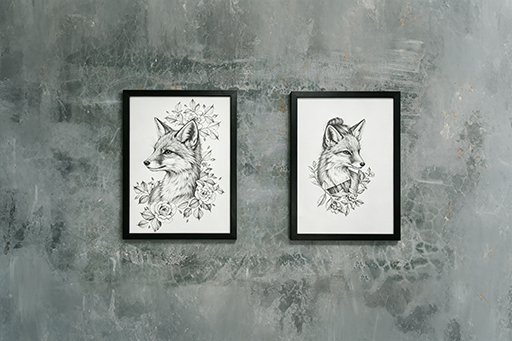
For watercolours, limited editions, and transfer drawings, a frame built to the highest conservation standards.
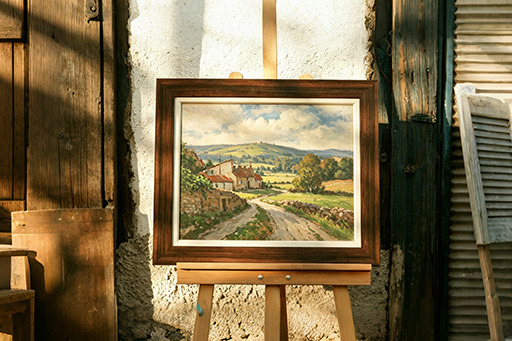
Inspired by museum collection practices, our Fine Art Print Frame features hand-finished hardwood mouldings, mats, and UV-protective glazing. Every joint is underpinned for invisible strength, every mat is CNC-cut for perfect bevels. This framing respects the tactile quality of fine art rag and photo papers, providing a dignified boundary that enhances value and ensures archival longevity for precious originals and reproductions alike.
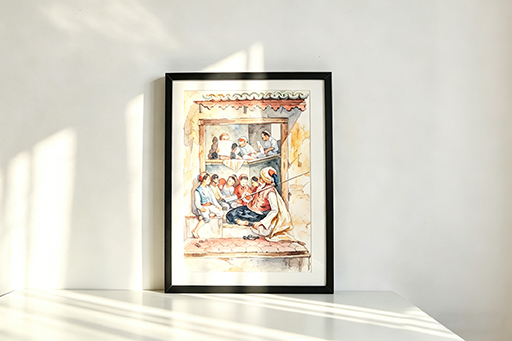
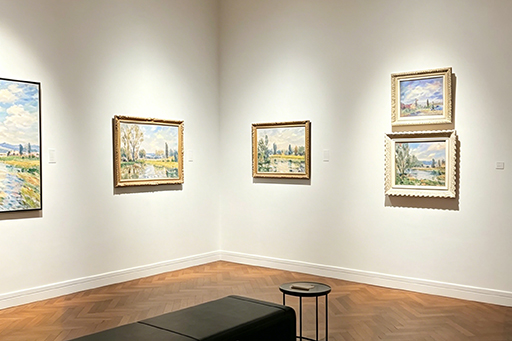
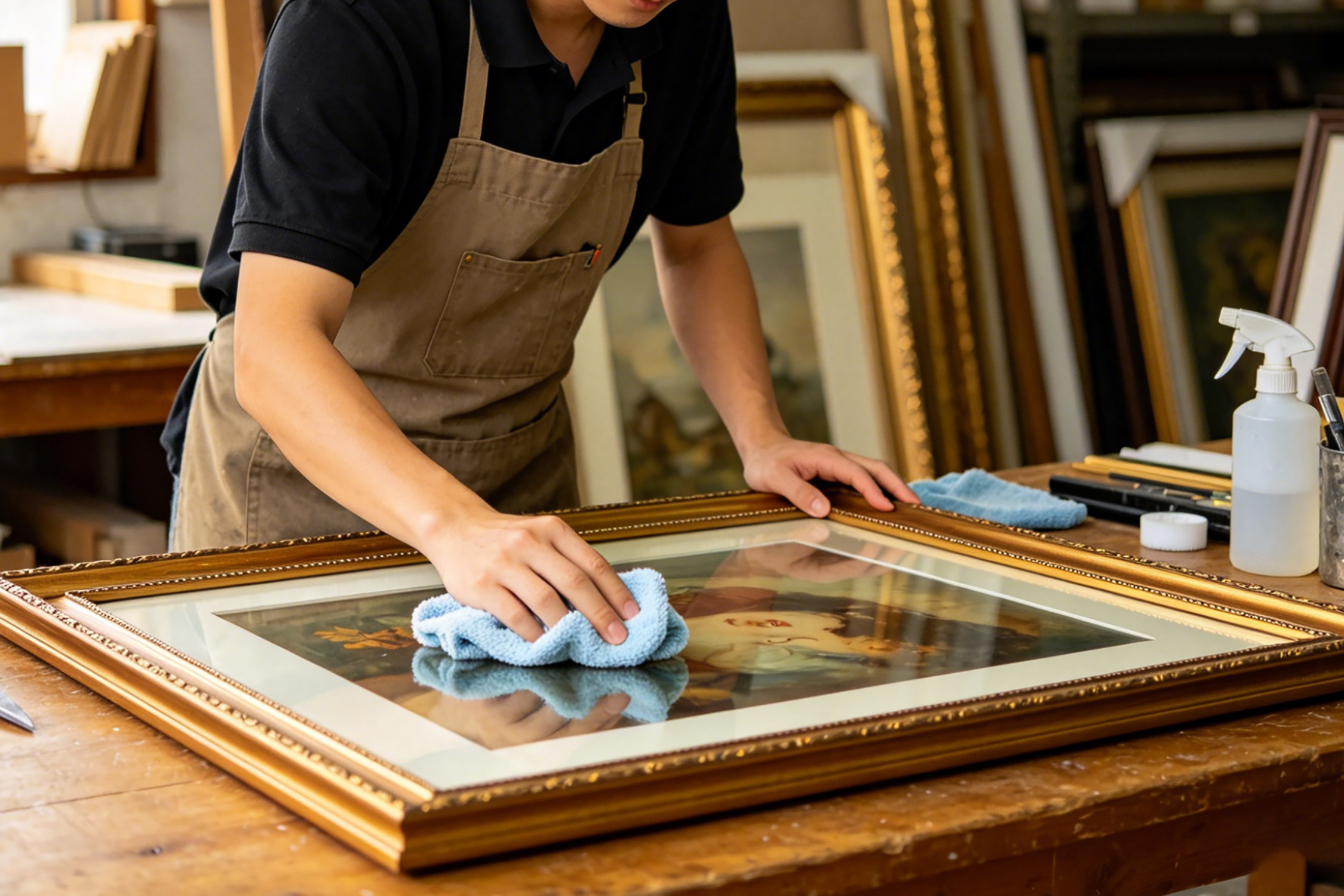
Beyond the Basics
A fine art print frame is not a decorative container, it is a preservation system. While standard framing suspends a print between glass and backing board, professional fine art framing engineers a microclimate around the artwork. Every component, from the rabbet depth to the sealing tape, is selected to defend against pollutants, humidity fluctuation, and thermal expansion.
In conventional framing, a photograph is placed into a ready-made moulding, secured with basic points, and sealed with adhesive tape. The result is a decorative object, pleasant at a distance but compromised upon close inspection. Over time, the print sags within the rabbet, the mount board yellows from the edges inward, and condensation creates irreversible ghosting between the glazing and the emulsion.
At Fine Art Digitals, we operate from a different premise: a frame is not a finishing touch. It is an engineered environment.
Our Beyond the Basics methodology rejects the compromises of standard framing in favour of a precision-driven, conservation-first approach. Every decision from the choice of wood species to the method of sealing the dust cover is made to extend the functional lifespan of the artwork while enhancing its visual presence. This is not decorative framing. This is preservation engineering.
Archive Application
A fine art print straight from the printer is not yet an artwork. It is a potential artwork vulnerable, impermanent, and incomplete. Without the intervention of archival framing, that same photograph will fade, yellow, and embrittle within a single generation. The colours your audience admires today will shift toward magenta-green imbalance within 7–10 years of indirect sunlight. The paper will acidify from contact with standard boards. The image will cockle and ripple as humidity cycles through its unprotected surface.
To apply an "Archive" treatment to a fine art print or reproduction is to transform it from a disposable object into a multi-generational asset. This is not merely a service, it is a certification of permanence, a guarantee of authenticity, and a commitment to the artwork's future value.
Creating an Archive is the culmination of over a decade of refinement, ensuring your artwork are preserved for future generations while meeting the highest museum and gallery standards. This application is essential for:
Individual Artists and Professional Photographers - Produce in fine art printing—cotton rag papers, pigment inks, calibrated workflows, because of understand that quality materials produce quality reproductions. Standard framing undermines that investment entirely. A print that would last 100 years in storage will last 7 years in a standard frame under indirect sunlight.
Discerning Collectors - Acquire art not only for enjoyment but as a value. A framed print's value depends on two factors, the condition of the print itself, and the quality of its presentation. A faded print has lost value regardless of its edition number. A print framed with non-archival materials may be rejected by auction houses or resale platforms.
Prestigious Galleries and Museums - Institutions cannot display works that violate conservation ethics. Curators and registrars require documentation of reversibility, acid-free materials, and UV protection before a work is approved for exhibition. Works framed to lower standards are rejected or require costly reframing upon arrival.
Interior Design Firms and Architects - Specify artwork for high-end commercial and residential spaces where environmental conditions are not fully controlled. The executive corner office with floor-to-ceiling windows. The coastal beach house with salt air and humidity. The hotel lobby with unpredictable climate systems.
Corporations and Government Agencies - Public art commissions and boardroom installations require documented durability and adherence to strict preservation standards. A framed work that fades within a decade represents a failure of fiduciary responsibility public money was spent on something that did not last.
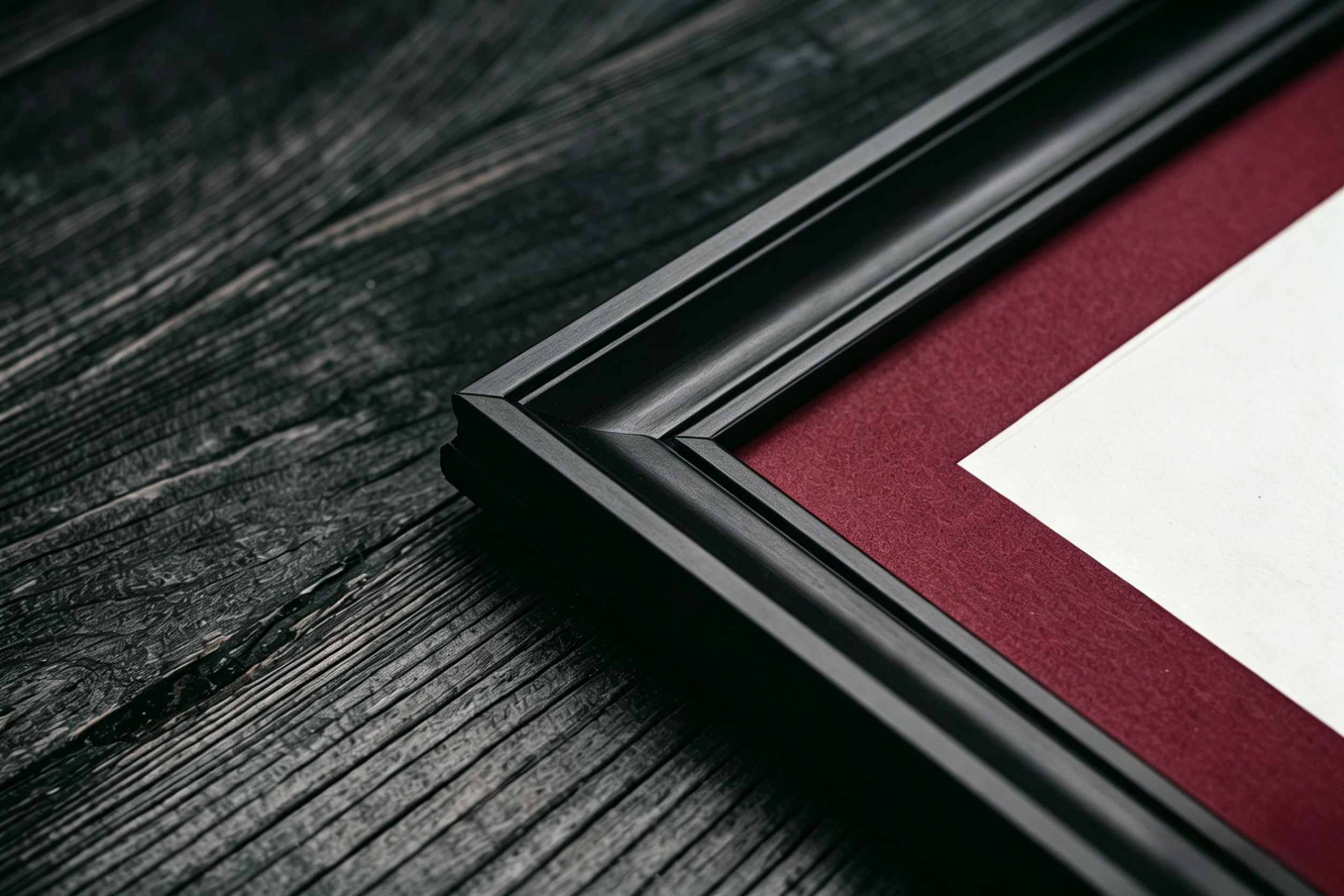
Technical Information
Standard Grade Fine Art Framing
Glazing
Function : Standard. Front Protection Pane : Acrylic and Glass, Thickness : 2-3 mm.
Mounting Board
Premium High Density. Framing Grade. White Foam Board. Thickness : 3-5 mm.
Matting
Mountboard Quality Level : 2-3. Thickness : 4 ply, 1.4 - 1.6 mm. Colour : White, Black and Colours.
Wooden Frame Mouldings
Premium Wooden Frame Bar. Colour : White, Black and Colour. Surface : Smooth, Matt. Dimension : 2-4 cm (Width) x 2-4 cm (Depth).
Backing Board
Wooden Board. Thickness : 2 mm.
Archival Grade Fine Art Framing
Glazing
Function : Featured. Front Protection Pane : Acrylic and Glass, Thickness : 2-3 mm.
Mounting Board
Premium High Density. Art Grade. Acid Free. White Foam Board. Thickness : 3-5 mm
Matting
Mountboard Quality Level : 1-3. Thickness : 4 ply, 1.4 - 1.6 mm. Colour : White, Black and Colours.
Wooden Frame Mouldings
Premium Wooden Frame Bar. Colour : White, Black and Colour. Surface : Smooth, Matt. Dimension : 2-4 cm (Width) x 2-4 cm (Depth).
Backing Board
Wooden Board. Thickness : 2 mm.
Art Gallery Canvas Print Frame
Gallery-Wrap Presence with Structural Depth
"Where texture meets tension, art becomes architecture."
Canvas demands depth. Our stretcher bars and float frames give it presence.
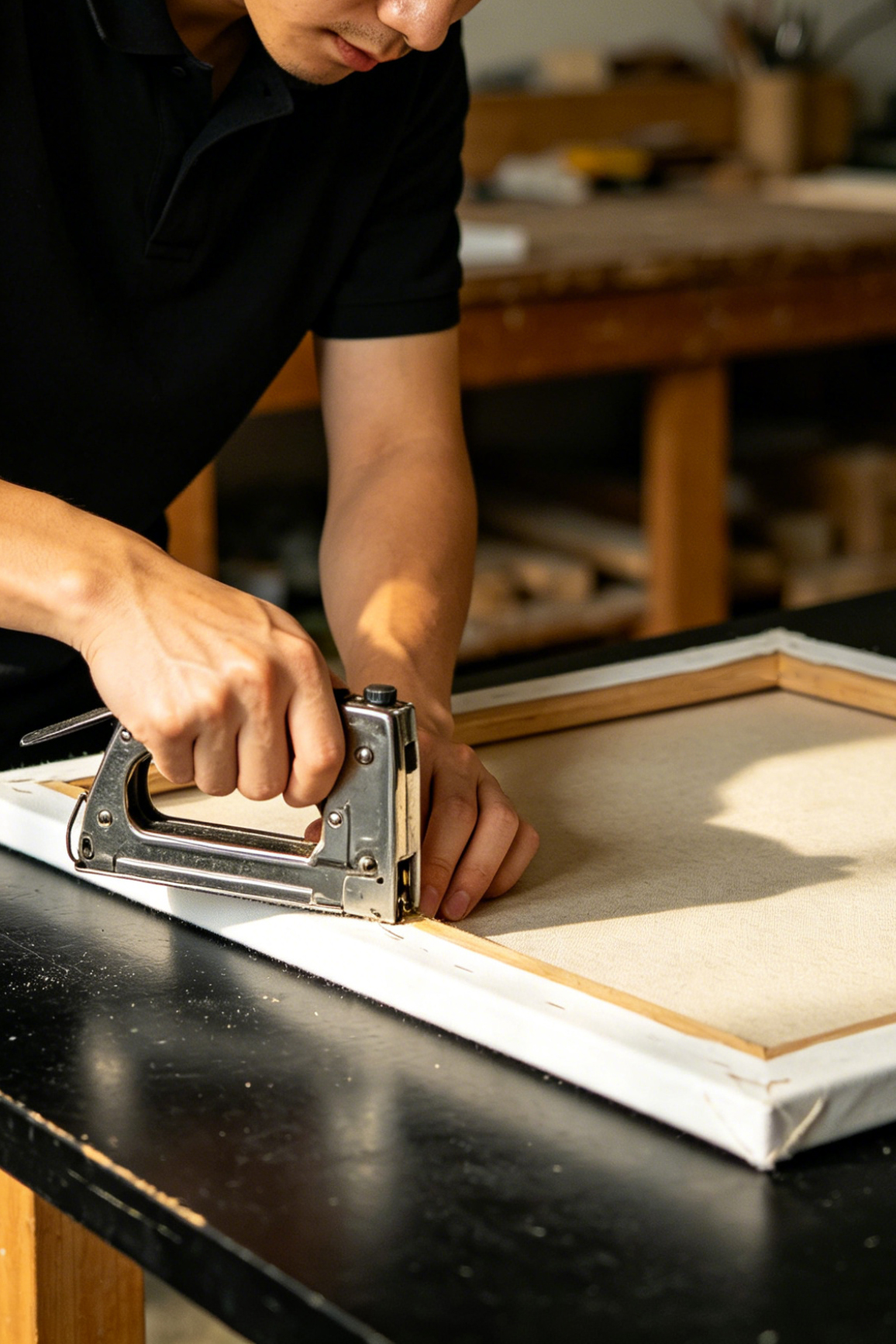
Transform your canvas reproduction into a gallery-ready statement. We begin with kiln-dried, warp-resistant stretcher bars, hand-tensioning the canvas for a flawless surface. Choose between a clean gallery wrap (where the image continues around the edges) or a floating frame (where the canvas appears to hover within a hardwood profile). The result is a dimensional artwork that bridges painting and object, ready to command any wall.
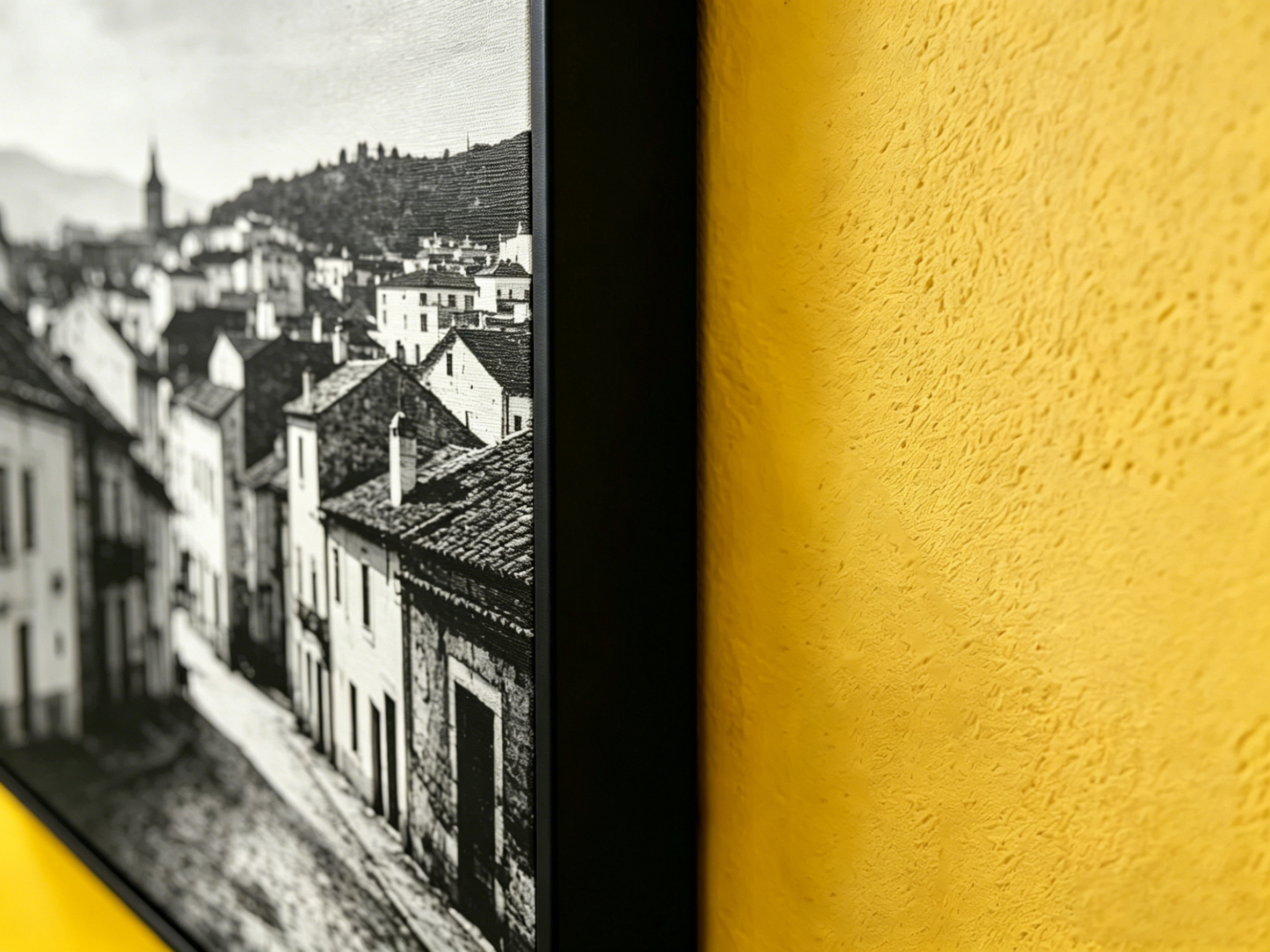
Beyond the Basics
A canvas print frame is not a wooden box that hides the edges of a stretched canvas. It is a tension-management system, a structural intervention, and a critical component of the artwork’s long-term stability.
In standard gallery wrapping, a canvas is stretched over generic pine bars, stapled roughly along the sides, and shipped without further consideration. Within months, the canvas loosens, creating distracting ripples across the surface. Within years, the staples corrode, the miters separate, and the canvas sags permanently against the frame. The result is not a gallery piece, it is a ticking clock.
At Fine Art Digitals, we reject this disposable approach. A canvas print frame serves three essential functions beyond mere decoration. It maintains planar tension, preventing the canvas from sagging, drumming, or developing surface undulations over decades of display. It provides structural anchorage, distributing the canvas’s weight evenly so that hanging hardware does not deform the stretcher bars or tear through the canvas edge.
For canvas framing moves past the illusion of “gallery wrap” toward true conservation-grade engineering, it is made to preserve the canvas print as the dimensional, textural, tactile artwork it was meant to be.
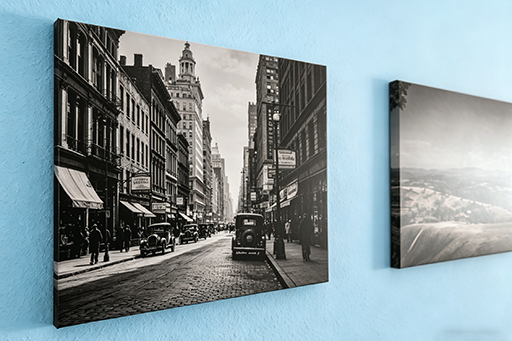
Stretched Canvas Print
Archival-grade canvas stretched over kiln-dried bars for lasting tension and a gallery-ready edge.
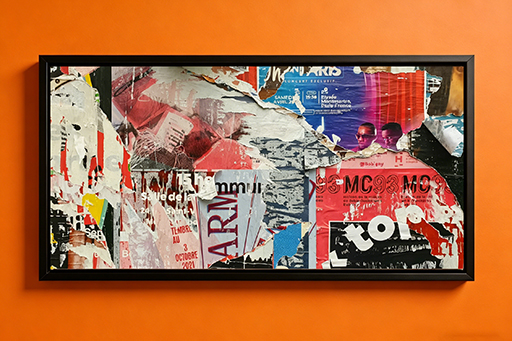
Stretched Canvas Print with Floater ( L Frame )
The contemporary choice, allowing the canvas to "float" within a shadow gap for a minimalist museum aesthetic.
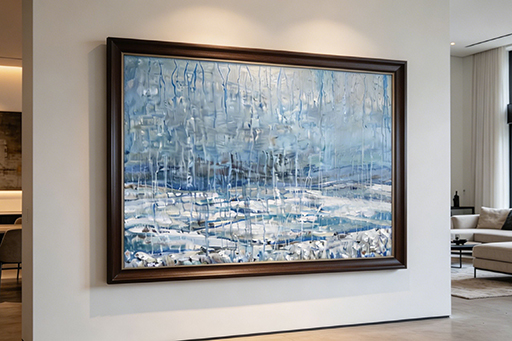
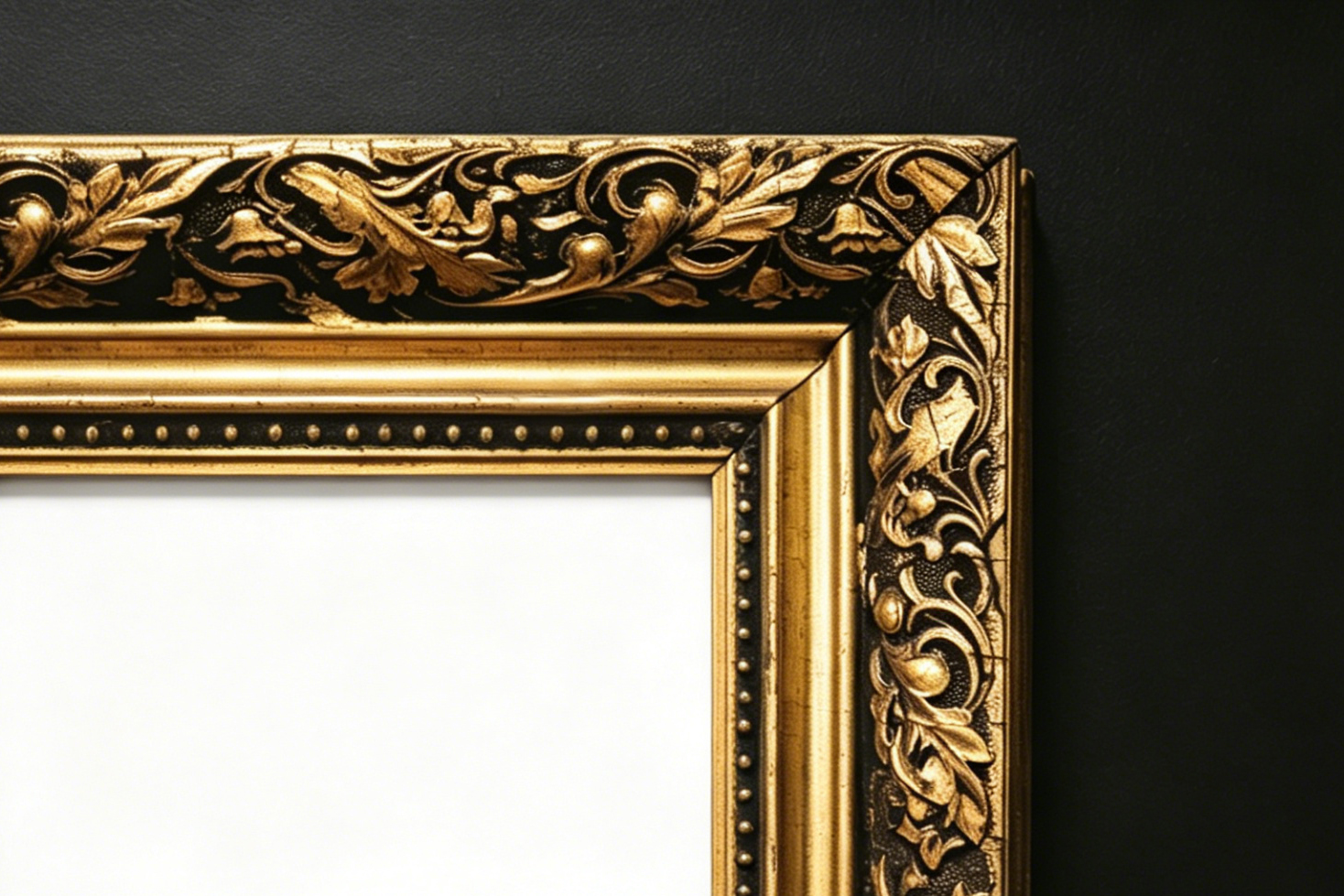
Stretched Canvas Print with Frame
Traditional elegance meets preservation, with a custom frame added to a stretched print for a finished, classic look.
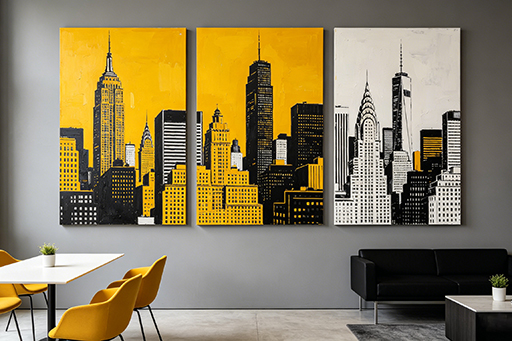
Triptych Stretched Canvas Print
Transform working space with a single narrative spread across three perfectly aligned archival canvas panels.
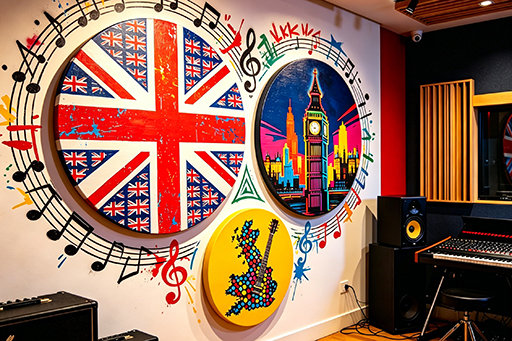
Stretched Canvas Print in Circle
Break from the rectangle. The art precisely cut and stretched on a circular frame for a modern, distinctive statement.
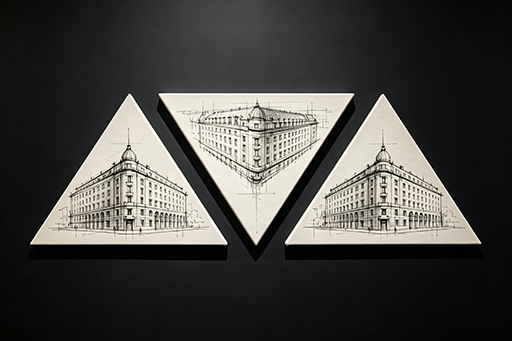
Stretched Canvas Print in Triangle
Unconventional geometry for dynamic spaces. A unique, precision-crafted triangular canvas that commands attention.
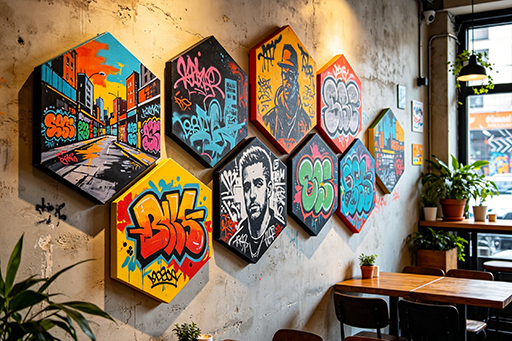
Stretched Canvas Print in Hexagon
Nature's perfect shape for artwork. A six-sided canvas ideal for creating mesmerizing, repeating pattern walls or a standout solo piece.
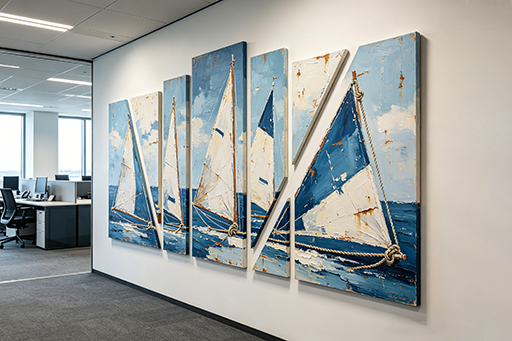
Multi-panel Stretched Canvas Print in Multi-shape
Complete design, realized across a custom arrangement of different geometric stretched canvases for ultimate creative freedom.
Archive Application
A canvas print fresh from the printer is not yet an artwork. It is a flexible sheet of coated textile, vulnerable to tension loss, environmental expansion, and edge abrasion. Without the intervention of professional canvas framing, that same print will loosen within months. The surface will begin to cup inward, pulling the viewer’s eye into a concavity rather than the image itself.
To apply an archive treatment to an art gallery canvas print is to certify that the work will maintain its structural integrity, surface fidelity, and exhibition-ready presentation for generations.
Creating an Archive for canvas requires specialized knowledge that differs entirely from paper-based framing. Paper is rigid when mounted. Canvas is elastic. Paper hates humidity. Canvas breathes with it. A paper frame seals the artwork inside a microclimate. A canvas frame must allow the textile to expand and contract without losing flatness or developing slack.
This is not merely a service. It is a certification of structural permanence, a guarantee that the canvas will not sag, ripple, or degrade under normal exhibition conditions.
The Archive application for canvas is essential for:
Individual Artists and Professional Photographers - Chose fine art canvas for its texture, its tooth, its ability to hold shadow detail without reflective glare. Limited editions on canvas demand framing that matches the permanence of the pigment inks, otherwise, the substrate fails before the color fades.
Discerning Collectors - A canvas print is often the largest piece in a collection. It commands wall space and sight lines. When that canvas begins to ripple or bow inward, the entire room feels diminished.
Prestigious Galleries and Museums - Curators reject canvas works that arrive with warped stretchers, protruding staples, or any adhesive that has touched the printed surface. Gallery lighting often hot and directional accelerates canvas loosening in standard frames. Institutions require documentation of museum-grade stretcher construction, blind-stapled or splined joinery, and backing systems that permit vapor transfer while blocking dust ingress.
Interior Design Firms and Architects - Specify canvas prints for spaces where paper would look sterile, residential living rooms, boutique hotel suites, corporate wellness areas.
Corporations and Government Agencies - Public art commissions on canvas, lobby installations, historical society portraits, civic center commissions must withstand decades of unsupervised display. Our Archive print frame provides durability, meeting public sector preservation standards.
Technical Information
Art Gallery Canvas Framing
Canvas Stretcher Bar
Premium Wooden Stretcher Bar, 0.75" / 1.5" Inch
Art Gallery Canvas Framing With Floater (L Frame)
Canvas Stretcher Bar
Premium Wooden Stretcher Bar, 0.75" / 1.5" Inch
Floater Frame ( L Frame )
Premium Wooden Frame Bar. Colour : White, Black and Colour. Surface : Smooth and Textured, Matt and Gloss. Dimension : 1 cm (Width) x 4.8 (Depth).
Art Gallery Canvas Framing With Premium Frame
Canvas Stretcher Bar
Premium Wooden Stretcher Bar, 0.75" / 1.5" Inch
Wooden Frame Mouldings
Premium Wooden Frame Bar. Colour : White, Black and Colour. Surface : Smooth and Textured, Matt and Gloss. Dimension : 2-10 cm (Width) x 4.8-5.5 cm (Depth).
Frameless Photo Print
The Purity of Pigment Suspended in Acrylic
"Perfection needs no perimeter."
No frame. No mat. Just the image, fused to crystal-clear acrylic for unparalleled depth.
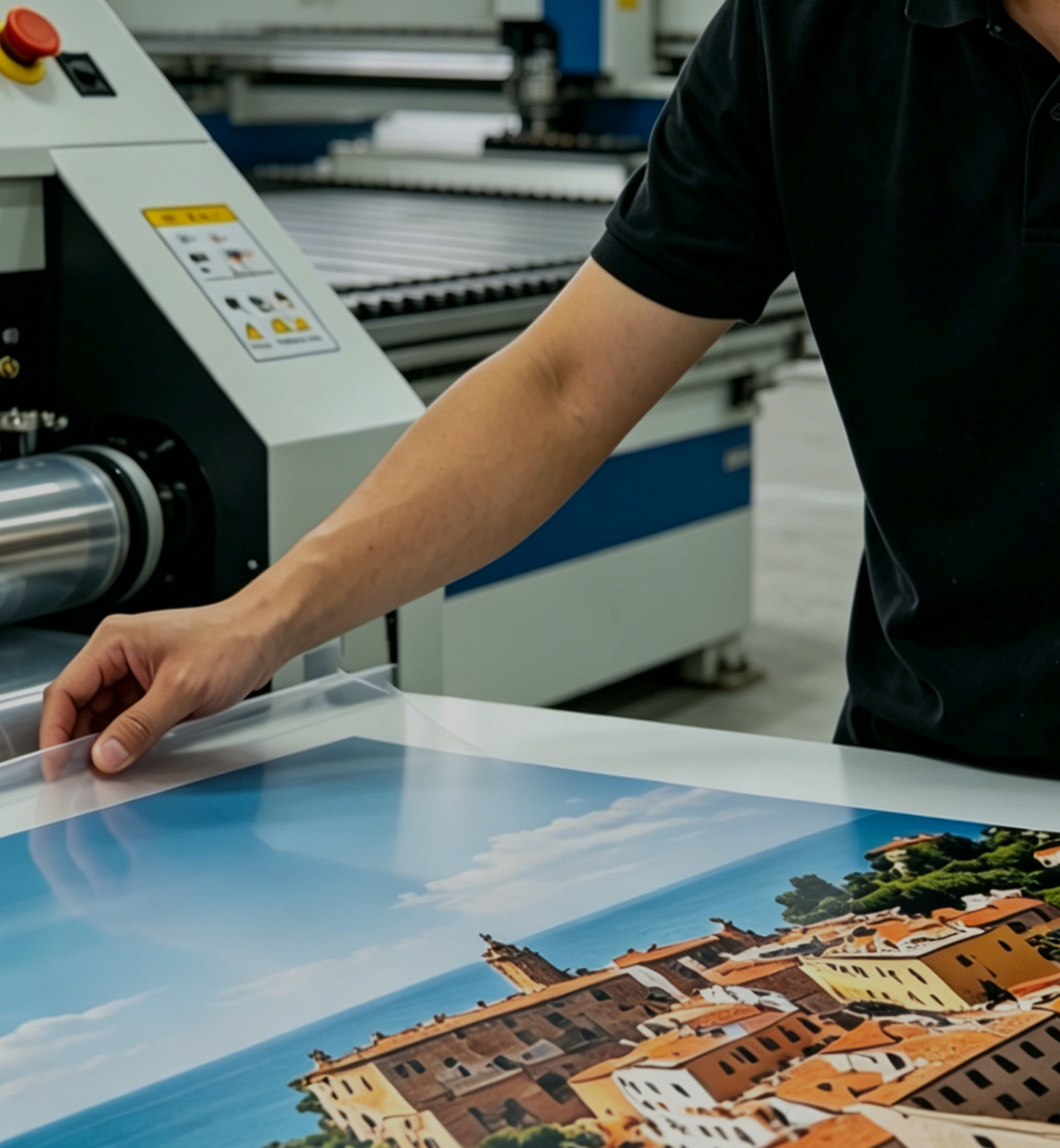
For the ultimate contemporary presentation, our Frameless Facemount bonds your photographic or digital print directly behind optical-grade acrylic. This technique creates the illusion of the image floating on the wall, with colours appearing impossibly deep and detail razor-sharp. The high-gloss surface adds vibrancy, while the rigid acrylic provides inherent protection, no glass, no frame, just pure, immersive imagery. Ideal for statement pieces, commercial spaces, and collectors seeking the apex of modern display.
Beyond the Basics
An acrylic facemount print is not a photograph laminated to a sheet of plastic. It is a light transmission system, a refractive engineering marvel, and the closest analog to a window rather than a wall. While traditional framing builds around an image, a frameless acrylic mount uses the optical properties of the material itself to project the image forward, creating the illusion that the photograph is floating inside a solid block of crystal.
At Fine Art Digitals, we operate from a different premise: The absence of a frame does not mean the absence of engineering. A frameless print is not a shortcut; it is the most demanding presentation format in existence. Every surface, every bond, and every edge must be flawless because there is no moulding to hide a mistake. For a professional photograph, the right facemount solution eliminates the visual noise of traditional framing while demanding greater precision in cutting, bonding, and edge finishing.
Our Beyond the Basics methodology replaces off-the-shelf sheet goods with CNC router die cutting a subtractive fabrication process that transforms acrylic facemounts from rectangular objects into custom geometries tailored to the image. We do not cut the print to fit a sheet. We cut the acrylic to complete the composition. The artwork image is no longer required to be square. Any shape of photograph contains the silhouette of a leaf, the curve of a horizon, the negative space between figures can become the literal outline of the finished piece. The photograph ends exactly where the image says it should end, not where a frame shop's blade forces it to.
Archive Application
A high-resolution photograph printed on fine art paper or archival photographic paper is not yet ready for frameless display. It is a delicate emulsion or coating, vulnerable to UV radiation, atmospheric pollutants, and physical abrasion. An acrylic facemount fresh from the bonding press is not yet an archival object. It is a laminate, strong, transparent, and dangerously deceptive. Without professional intervention, that same print will develop edge lift within 3–5 years, as humidity wicks into the exposed adhesive layer. The acrylic will develop stress crazing around mounting points. The UV inhibitors in standard acrylic will exhaust themselves unevenly, leaving the print's center protected while its edges fade.
To apply an archive treatment to a frameless photo print (acrylic facemount) is to transform it from a display panel into a permanent optical object. This is not merely a service, it is a certification of transmission permanence, a guarantee that the image will retain its colour accuracy on delivery day will remain unchanged for generations, without yellowing, delamination, or edge failure.
Creating an archive for acrylic facemount requires specialized knowledge that differs entirely from paper or canvas framing. Paper needs a microclimate. Canvas needs breathability. Acrylic facemount needs total isolation and optical unity. A single speck of dust trapped between the print and the acrylic becomes a permanent, magnified flaw. A non-archival adhesive will off-gas, creating a milky haze from the inside out. A standard acrylic sheet will yellow at the edges while the centre remains clear, creating a visible “frame” of degradation even when no moulding exists.
This application is essential for:
Individual Artists and Professional Photographers - Facemounting for its depth, its gloss, its ability to make pigment inks appear to float. Standard facemounting given that look for two years. Archive acrylic preserves full tonal range, colour saturation, and micro-contrast, gives that look for two decades. The limited editions on acrylic demand a fabrication process that matches their price point and permanence.
Discerning Collectors - A frameless acrylic print makes a definitive statement. This is not a reproduction trying to look like a painting. This is a photograph embracing its material truth. Collectors choose acrylic facemount for large-scale works, triptychs, and any image where a frame would interrupt the composition. The Archive certification guarantees that the prnt will not fade unevenly.
Prestigious Galleries and Museums - Curators and registrars increasingly reject framed works for contemporary photography exhibitions. The frame creates a barrier between the viewer and the image’s surface. Acrylic facemount is the preferred format because it eliminates that barrier. However, institutions will also reject poorly mounted acrylics or trapped dust. The archive protocol meets museum specification, optical clarity, and accelerated aging resistance.
Interior Design Firms and Architects - Specifying artwork for high-traffic commercial lobbies, luxury residential elevates, or healthcare environments demands frameless durability. A framed work invites vandalism (glass breaks) and accumulates dust. An acrylic facemount can be cleaned directly with a microfiber cloth. It has no crevices, no glass to shatter, no frame to warp. Architects specify our Archive facemount for feature walls, wayfinding installations, and immersive environments where the image must feel painted onto the wall itself.
Corporations and Government Agencies - Public art commissions increasingly favor acrylic facemount for wayfinding installations, historical displays, and brand environments. The material is durable. The look is contemporary. But standard facemounting does not meet public sector preservation requirements. Archive acrylic provides documented durability, material traceability, and a long durable structural guarantee.
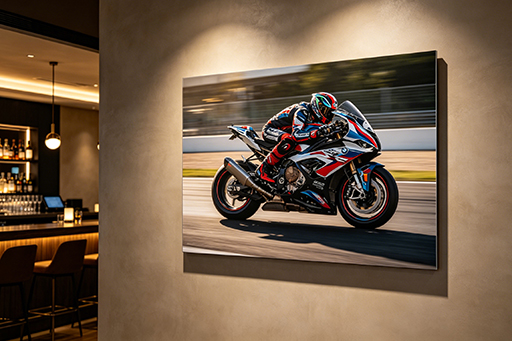
Frameless Photo Print
A minimalist’s dream. The image printed on archival paper with a clean, floating edge and no visual barriers.
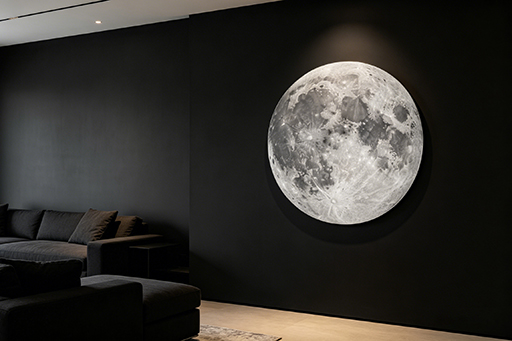
Frameless Photo Print in Circle
Break the rectangular mold. A circular, edge-to-edge print that offers a soft, modern portal to the image.
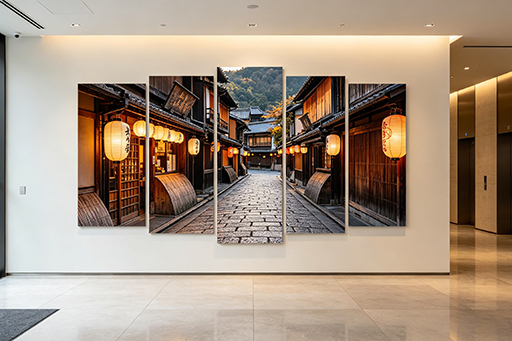
Multi-panel Frameless Photo Print
Expand the visual story across seamlessly aligned, frameless panels for a contemporary, gallery-installation look.
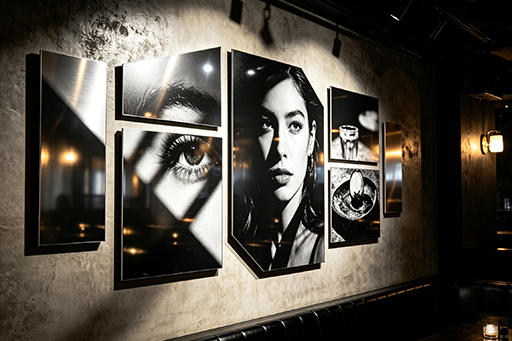
Multi-panel Frameless Photo Print in Multi-shape
Custom composition, realized across a dynamic grid of different frameless geometric panels for true artistic freedom.
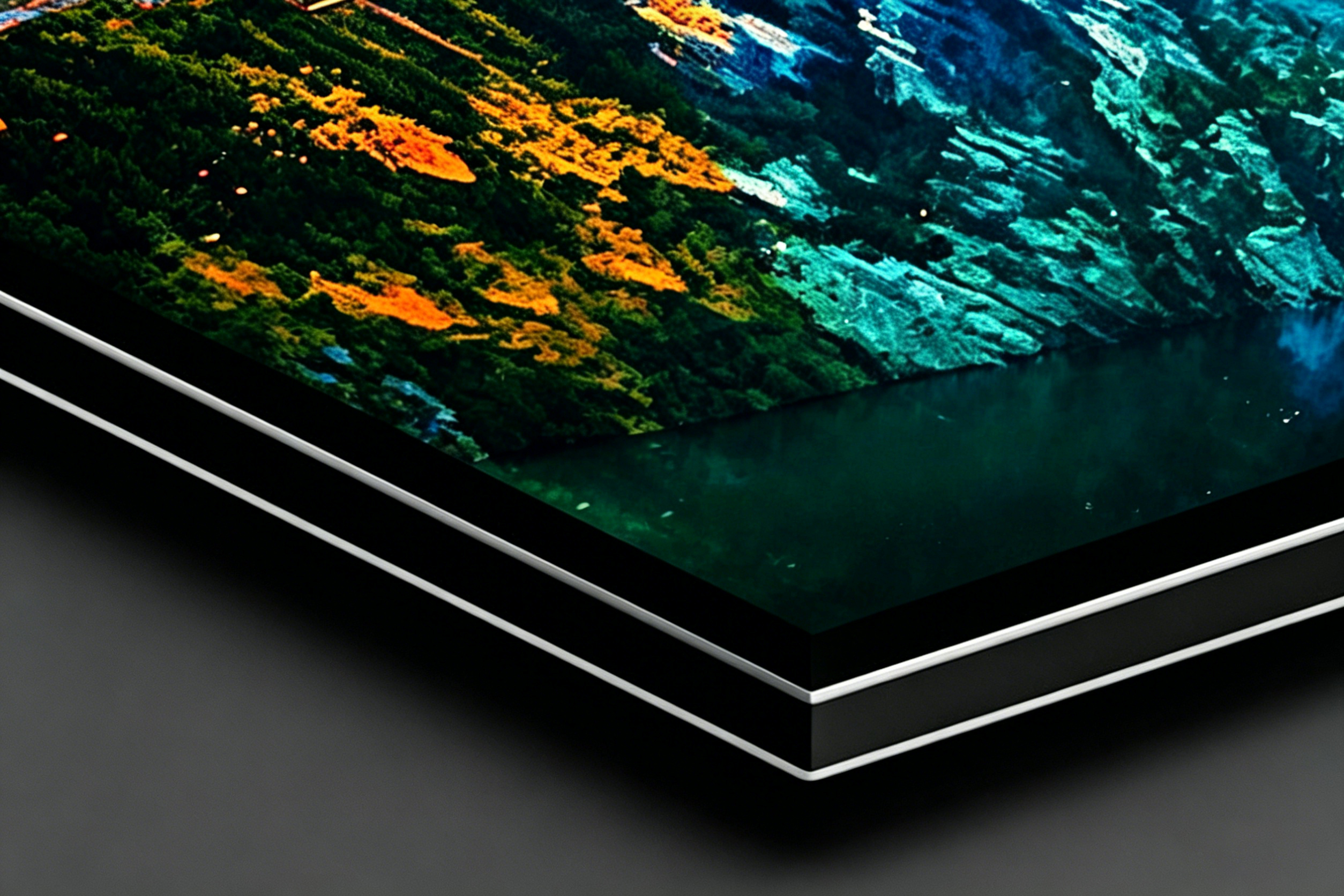
Technical Information
Standard Grade Frameless Photo Print
Glazing
Function : Standard. Front Protection Pane : Acrylic, Thickness : 2-3 mm.
Mounting Pressure-sensitive Adhesive
Function : Standard. Adhesive : Super Clean Transparent Double Side Sticker. Thickness : 1 mil.
Backing Board
Board : Aluminum Composite Panel (ACP). Thickness : 2-3 mm.
Hanging Systems
Aluminum Hanging System. Thickness : From 1 cm.
Other Process
Frame Edge Crystal Polishing.
Professional Archival Grade Frameless Photo Print
Glazing
Function : Featured. Front Protection Pane : Acrylic, Thickness : 2-3 mm.
Mounting Pressure-sensitive Adhesive
Function : Featured. Adhesive : Optical Grade Clean Transparent Double Side Sticker. Thickness : 1 mil.
Backing Board
Board : Aluminum Composite Panel (ACP). Thickness : 2-3 mm.
Hanging Systems
Aluminum Hanging System. Thickness : From 1 cm.
Other Process
Frame Edge Crystal Polishing.
"The Legacy Extension"
This is where the workshop's meticulous craft reaches its ultimate expression. Our final product is not merely a print, but a faithful extension of the original's legacy. From the precise color managed to the final, invisible join of assembly, each reproduction is a tangible commitment to archival integrity, receive more than a piece of art, a future-proof heirloom, crafted to honor the past while inspiring the space for generations.